
News
Three Signals a Model Is About to Ship, and How to Call It on Day One
The community is speculating about GPT-6.2, and a new anonymous codename appeared on Arena.
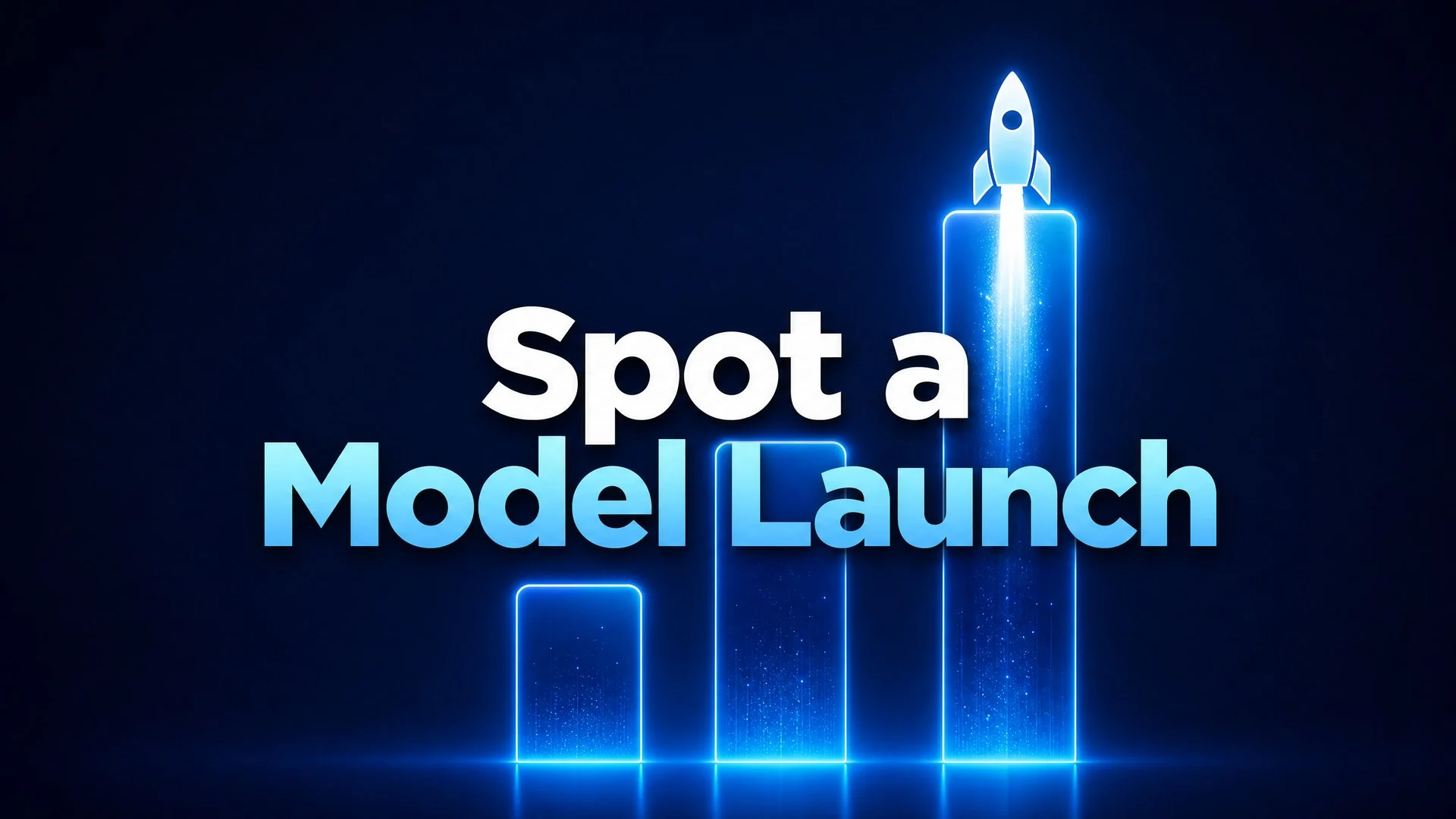
- Signal types
- 3
- Most reliable
- Arena codename
- Switch effort
- One field
New-model chatter has clustered this week: one thread says OpenAI will soon ship a model that "can solve a Millennium Prize problem," with speculation landing on GPT-6.2; another, from TestingCatalog, observes that Gemini 4 Carbon is being tested on Arena under the name Argon 4.
Weigh these two separately. The first is a secondhand claim with no verifiable official source, and "solves a Millennium Prize problem" would need extraordinary evidence. "Soon" is not a date and should not drive planning. The second is a more concrete observation: an unfamiliar codename showing up in public evaluations.
Rank these signals by reliability and you can tell which ones warrant preparation and which can wait.
Three signal types, most to least reliable
One: an anonymous codename on Arena.
Before a launch, vendors often drop a model into public head-to-head evaluations under a name. What you see is an anonymous entry and its win record, not a name. This is credible for a straightforward reason: the model has already run in real evaluations, so it is at least functional. Once the codename is identified, formal release usually is not far off.
It does not predict a date, though. Some codenames go live within a week or two, others sit for months.
Two: listings on aggregators and cloud catalogs.
A model appearing in a cloud vendor's catalog, or an aggregator listing it, means the infrastructure is ready. This is more substantive than a verbal statement because it maps to a real callable resource.
Three: executives talking.
"Coming soon" and "the next generation will be a major leap" get amplified the most and are worth the least to your decision: no date, no capability boundary, no price.
What to do with them
Not schedule. Prepare.
When a codename appears, you have roughly a few weeks. Spend it on:
- Pulling model names out of business logic into config or environment variables
- Confirming your call layer depends only on standard protocol fields, with no vendor-private bindings
- Preparing your own evaluation tasks so you can run them the day the model ships instead of assembling them in a hurry
Do those three and switching becomes a one-field edit. Skip them and it becomes days of code changes.
Day one
Do not start with a leaderboard.
Step one: run your own comparison. Same inputs, same prompts, new versus old, then compare outputs and token consumption. Leaderboards measure general ability; your task is specific.
Step two: cost the total, not the unit price. A 30% cheaper unit price with double the output length is more expensive overall.
Step three: split traffic. New model as group A, old as group B, start at 10%, watch for a week.
Why one protocol saves you
If both models speak OpenAI Chat Completions, switching is a string change:
curl -s https://api.hiapi.ai/v1/chat/completions \
  -H "Authorization: Bearer YOUR_HIAPI_API_KEY" \
  -H "Content-Type: application/json" \
  -d '{"model": "gpt-6.1-terra", "messages": [{"role":"user","content":"Hello"}]}'
Replace gpt-6.1-terra with any model on the same protocol. Request body unchanged, response shape unchanged.
New models on HiAPI appear in the model catalog and pricing endpoint as they go live, so you do not need an announcement to confirm. Checking the catalog is faster than refreshing a feed.
On claims about Millennium Prize problems
The Millennium Prize Problems are seven questions listed by the Clay Mathematics Institute, each with a $1 million award, judged by peer review in the mathematics community rather than at a launch event.
An AI system making a verifiable contribution to one of them requires a paper, a reproduction, and expert review. None of those arrive in a tweet. When you see a claim like that, look for a primary source. If there is none, set it aside.
This is not a claim that models have stopped improving. Math reasoning has advanced substantially over the past year. The distance between "solves olympiad problems" and "resolves an open problem" is still very large.
FAQ
How long between an Arena codename and release?
No fixed pattern. Two weeks in some cases, months in others, and some never ship at all.
How do I judge whether to trust a claim?
Look for a primary source. Official blogs, cloud catalogs, and callable endpoints count. Secondhand reports, speculation, and "reportedly" do not.
Should I switch everything on launch day?
No. Run your own comparison first, split traffic by percentage, keep a rollback path.
What if my platform does not carry the model?
Wait, or look at an equivalent tier. There is rarely only one model at a given capability level.
Bottom line
When model rumors are everywhere, being well-informed is not an advantage, because it does not change how prepared you are. What decides whether you can use a model on day one is how thin your call layer is and whether your evaluation tasks already exist.
Signals are for preparing, not for scheduling.
Open the model catalog and see what you can call
Sources
- GPT-6.2 discussion: https://x.com/kimmonismus/status/2117312784241160492 and https://x.com/kimmonismus/status/2117515222797648087 (community speculation; no official source found)
- Gemini 4 Carbon observed testing on Arena as Argon 4: https://x.com/testingcatalog/status/2117189114927673487
- Model availability and pricing verified against HiAPI production on November 3, 2026
Related articles
View all articles →-
News
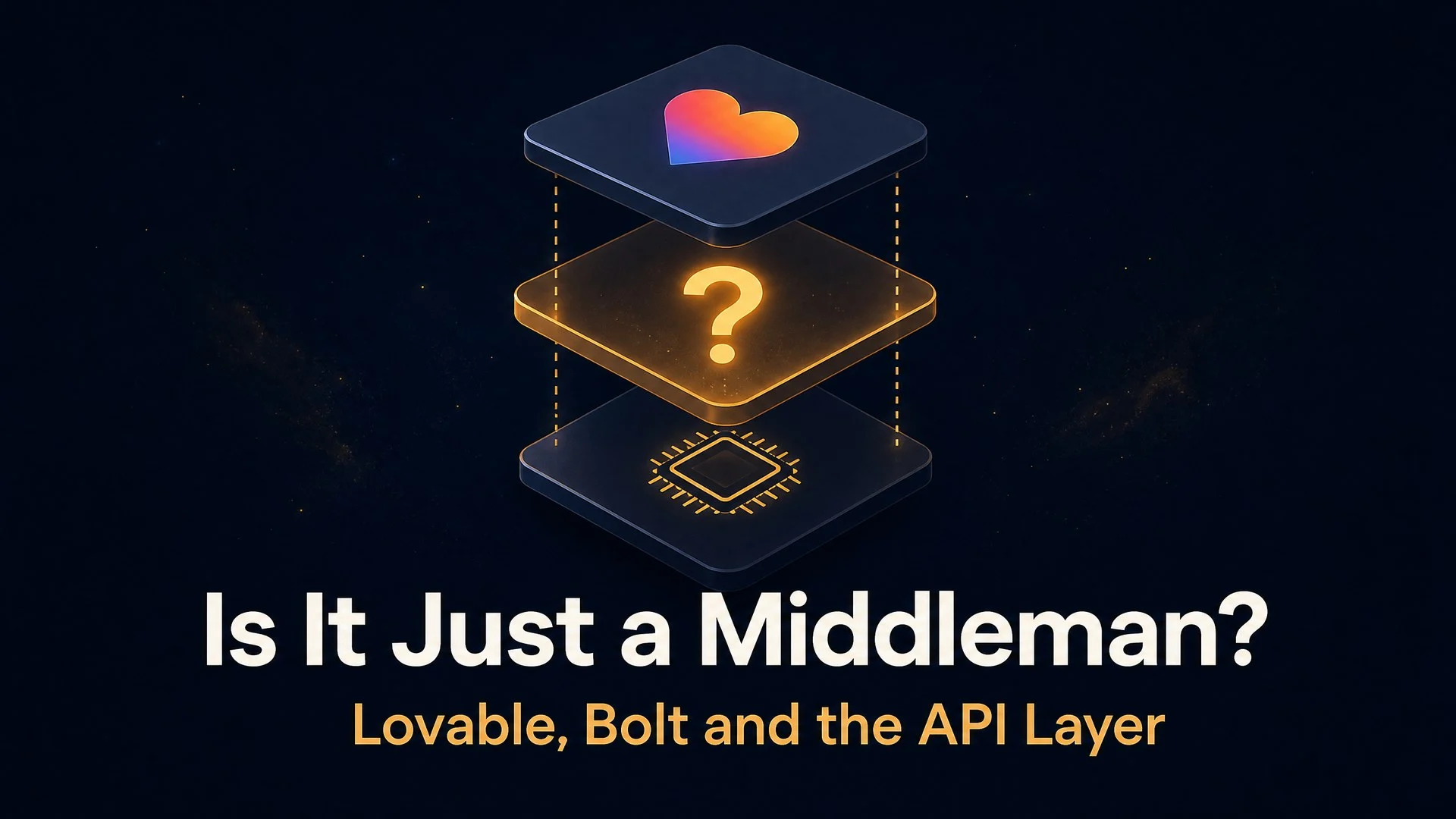
Is Lovable Just a Middleman? The Same Question Applies to API Gateways
A post with 1,166 likes asks why anyone still pays for Lovable or Bolt when Claude Code exists. The answer also decides how you should think about API aggregation layers.
6 -

News
November's Model Wave: 7 Names Circulating, 2 With Real Substance
A prediction list is making the rounds with Gemini 4 Carbon, Claude Fable 5.5, Qwen 4, and Grok 4.8. Separating rumor from what already ships.
6 -

News
GPT Image 2.6 Release Date: Status and Signals
There's no official date yet. Here's the timeline so far, the launch signals worth watching, and how to get notified.
4