
Visual Notes on Camera Language: Shot Demonstrations for Image-to-Video
Using a fixed first frame of a scene as an anchor, this demonstrates how common camera-movement grammar manifests in the frame with Hailuo 2.3 Fast (image-to-video pipeline). The first frame uses a clearly structured alley scene with distinct layers, making it easy to observe the perspective shifts and recomposition of subject relationships caused by movements such as push-in, pull-out, pan, truck, and follow. The creative approach treats "camera language" as a reusable visual vocabulary: under the same composition, differences in camera-movement prompts directly determine where the viewer's attention lands and the narrative rhythm, making it suitable for storyboard previsualization, concept validation, and batch testing of short-video ideas. Hailuo 2.3 Fast is positioned as a high-speed, low-cost economical variant, mainly used for rapid iteration in image-to-video, so it offers a clear efficiency advantage in shot-option comparison, pre-shoot communication, and the early stages of client pitches; this demonstration focuses on camera-movement readability rather than maximum image quality, in line with the positioning of this model family.
Style Camera Movement · Storyboard · film-grammar
Model hailuo-2.3-fast
Reference inputs
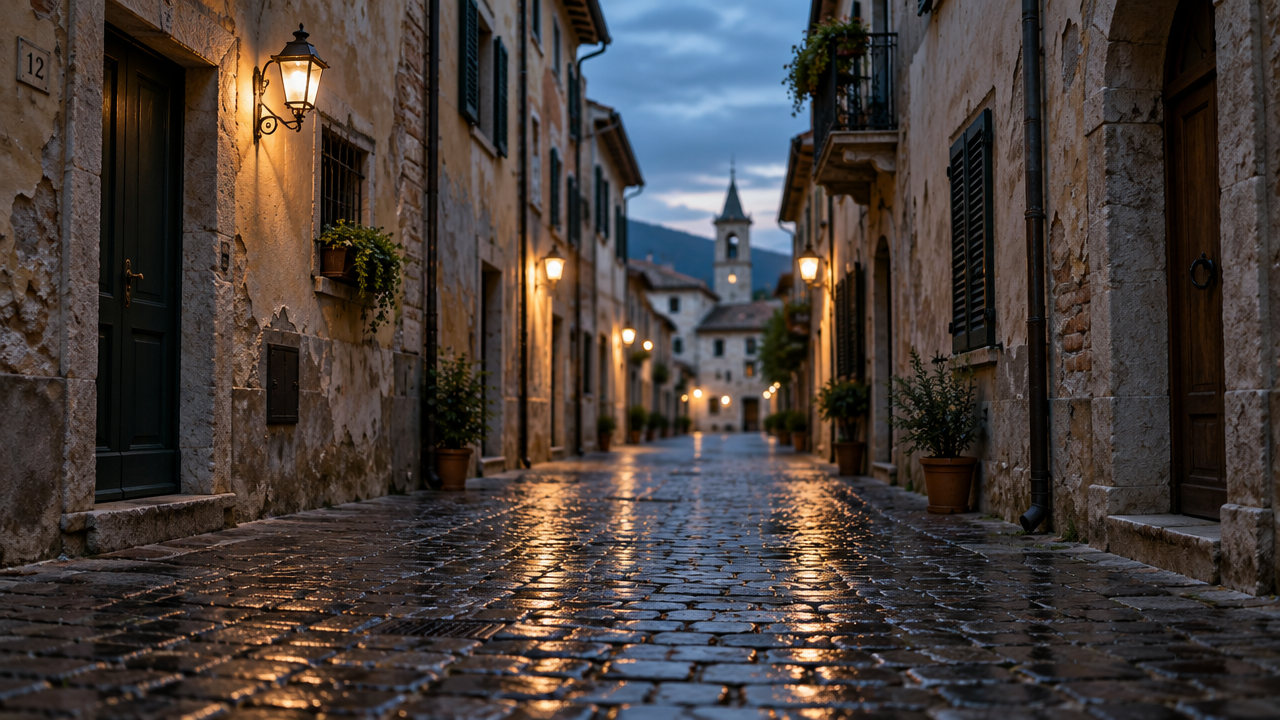
image_url
Try-it is unavailable: this model's playground configuration isn't ready yet.
Prompt
An image-to-video shot showing a slow push-in through a narrow European alley at dusk. The camera moves steadily forward along the road surface, maintaining a level horizon and stable composition, with slight parallax between the cobblestones in the foreground and the receding facades. Warm tungsten light mixes with cool blue ambient light; a shallow depth of field keeps the far end of the alley in soft focus. The pacing is steady and restrained, with no handheld shake, serving as a cinematic visual-grammar reference for storyboard previews.
Copy the full prompt and adapt it for your own generation.
Tags