
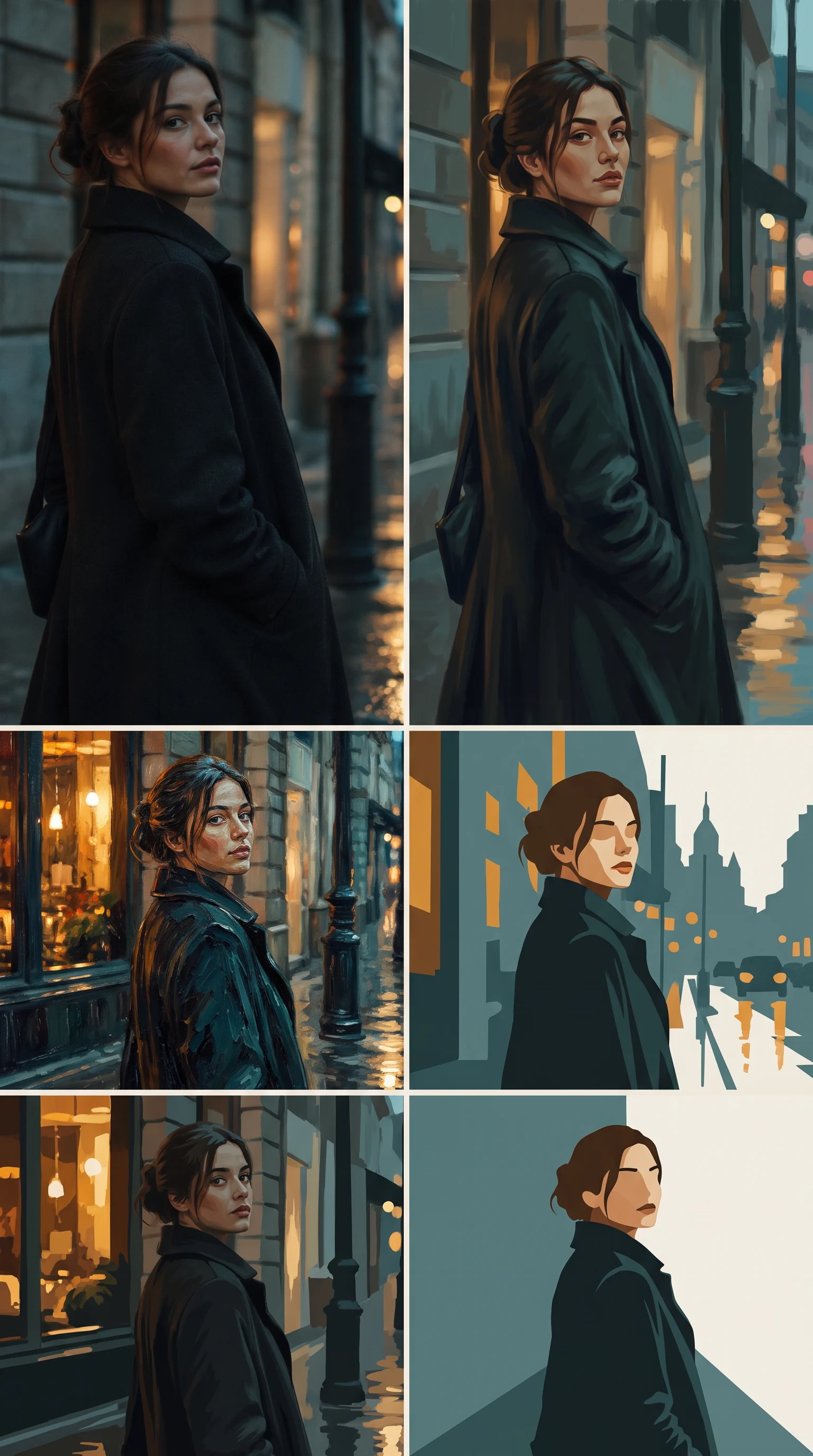
Style Spectrum: Realistic to Flat Illustration Evolution of the Same Subject
Using the same subject and composition as an anchor, this piece applies nano-banana-pro's image-to-image capability to create a continuous series of variations along a four-step style ladder: "realistic photography → semi-realistic painting → impasto illustration → flat vector." It demonstrates the model's range in adjusting rendering language while preserving scene and subject consistency. The creative approach treats "style" as an adjustable parameter rather than a random outcome: first, a realistic reference image locks down the composition, light direction, and subject pose; then prompts progressively abstract materials and lighting, observing how the reasoning backbone retains visual recognizability while reducing detail. This is suited for illustration style exploration, early-stage style alignment for serialized visual assets, and quickly comparing the practical results of realistic versus flat visual directions for brand or publishing projects. The reference image serves only as a composition and subject reference; the final output is genuinely generated by the author's pipeline.
Style Illustration · style-transfer · Editing
Model Nano Banana Pro
Reference inputs
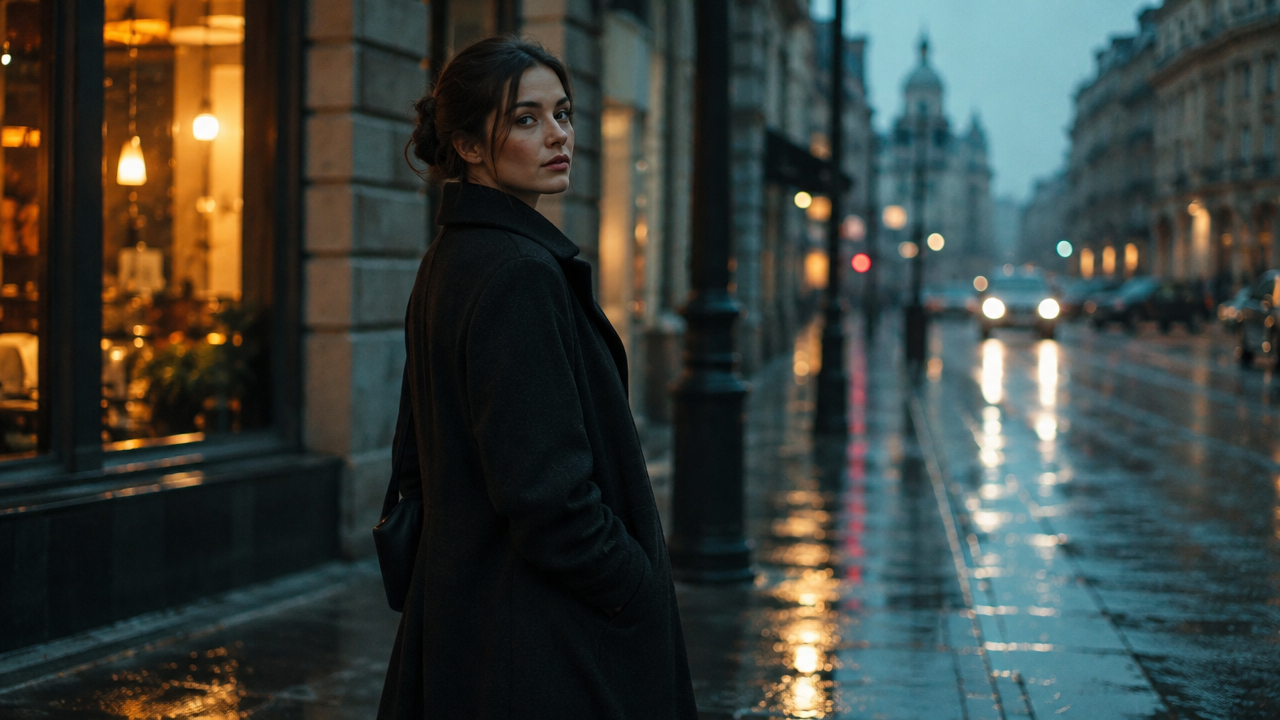
image_input
Prompt
A curated four-panel style spectrum of the same subject and composition: a solitary woman in a long coat stands on a rain-soaked city street at dusk, viewed from a three-quarter angle, with warm window light behind her. The image progresses from left to right: (1) photo-realistic editorial photography, 85mm lens, shallow depth of field, authentic skin texture and fabric weave, natural reflections on wet asphalt; (2) semi-realistic digital painting, soft edges, painterly brushstrokes in the coat folds, preserved light direction; (3) impasto illustration, visible palette-knife texture, saturated warm-cool contrast, simplified facial features; (4) flat vector illustration, hard-edged shapes, three-tone palette, no gradients, minimal facial detail, geometric negative space. Across all panels, the subject silhouette, pose, and light direction remain consistent; panels are separated by narrow neutral gaps; the overall piece uses a unified limited palette: desaturated teal, warm amber, and off-white. 16:9 composition, gallery-grade color grading, no text, no watermark.
Copy the full prompt and adapt it for your own generation.
Tags