
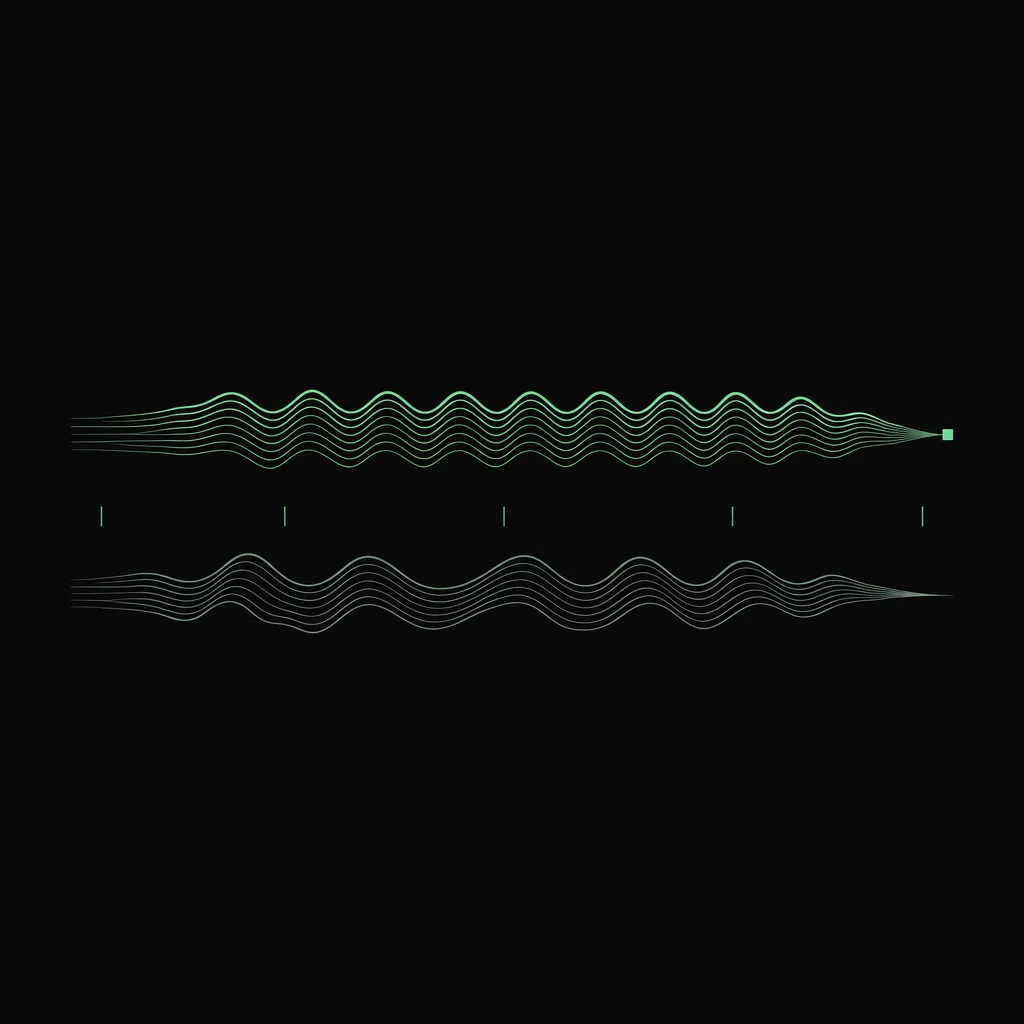
Qwen-Audio-3.0-TTS Flash Voice and Instruction Style Comparison
This piece uses qwen-audio-3.0-tts-flash (Alibaba·text-to-speech) to synthesize a bilingual sentence, demonstrating the perceptual differences of the same text under different built-in voices and natural-language style instructions. Design approach: the schema's required fields are only text and voice; the rest are optional parameters. Therefore, the base input fixes only the text to be synthesized and one built-in voice, then uses instruction to describe the tone and manner of expression, uses language_hints to mark Chinese as the priority, and provides stable, reproducible values for rate / pitch / volume / seed / format / sample_rate, so developers can directly compare against the real submit input snapshot to understand the role of each field. Content composition: the text to be synthesized is a product announcement sentence containing mixed Chinese and English, long enough to reflect speech flow, pauses, and stress handling; the style instruction is limited to "a steady, professional broadcast tone, moderate speaking rate, natural closing at the end of sentences," avoiding exaggerated performance, thereby getting closer to the real listening experience of live broadcasting and customer service scenarios. Applicable scenarios: real-time voice announcements and notifications, voice output for conversational assistants, and multilingual content dubbing. Because Flash is positioned toward speed and low cost, and the current endpoint has a limited number of built-in voices and does not support text-based voice design, this example can serve as a minimal runnable baseline for evaluating its intelligibility and voice consistency; when higher audio quality is needed, the Plus version in the same family can be used for comparison.
Style voice-demo · Multilingual · Instruction Control
Model qwen-audio-3.0-tts-flash
Try-it is unavailable: this model's playground configuration isn't ready yet.
Prompt
Pure voice demo: read a calm, professional bilingual product announcement in a steady broadcast tone; even pacing, clear articulation, natural falling intonation at the end of sentences, without exaggerated emphasis; about 20 seconds; single speaker, dry studio recording, no background music, no ambient sound.
Copy the full prompt and adapt it for your own generation.
Tags