
Visual Notes on Cinematic Language: A Guide to Common Camera Movements in Image-to-Video
This is a "Visual Notes on Cinematic Language" piece for developers and visual creators: a cinematic still frame is used as the conditioning image, and Veo 3.1 Lite renders the same corridor scene into a short film with clear camera-movement intent through image-to-video, visually demonstrating how "camera language in the prompt" translates into on-screen motion. In terms of composition, the work has only one required media input (input.image_url), which provides the static baseline for composition, lighting, materials, and character poses; the text prompt describes only motion—push-in, lateral move, tracking, crane up/down, and focus changes—without altering the scene itself. The remaining parameters are non-media fields declared by the author's pipeline: duration, resolution, aspect ratio, whether to generate native audio, negative prompt, seed, and safety threshold, all submitted according to the schema's enums and default values. Use cases include: quickly validating the feasibility of camera moves for storyboard scripts; serving as a low-cost test-shoot step in high-volume short-video production pipelines; and building a "camera-move term—visual result" reference for team members. Veo 3.1 Lite belongs to the Veo 3 series, supports image-to-video and outputs video with audio, and offers 16:9 / 9:16 aspect ratios, 720p / 1080p resolutions, and 4s, 6s, and 8s duration options—suitable for this kind of short-duration, high-throughput motion-demo content.
Style Camera Movement · Storyboard · Education
Model Veo 3.1 Lite
Reference inputs
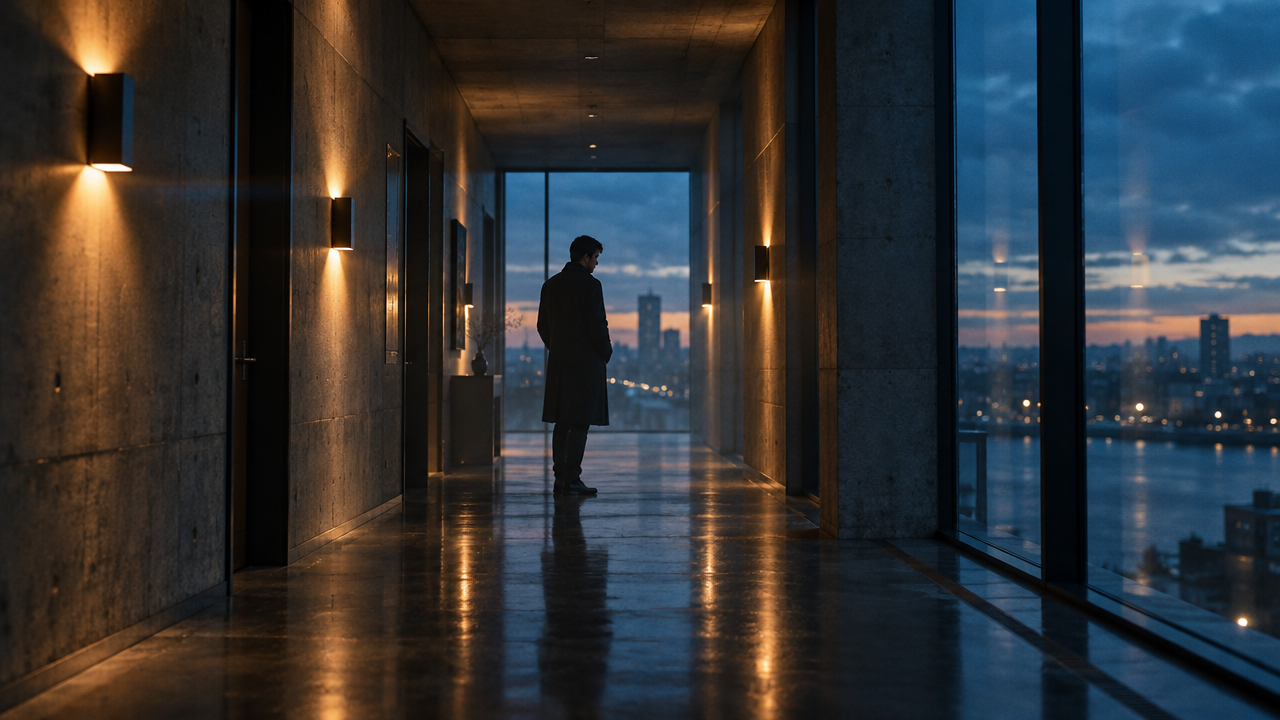
Input image
Prompt
Turn the given still frame into a continuous camera-movement animation. Begin with a slow push-in along the narrow corridor, then a gentle lateral move to the right that reveals the window light source, followed by a subtle focus shift from the foreground subject to the deep background of the corridor. Keep the lighting and set exactly consistent with the source image; the motion should be physically plausible, with no object deformation. Steadicam-like smoothness, 24fps cinematic feel, shallow depth of field, ambient interior sound only.
Copy the full prompt and adapt it for your own generation.
Tags