
Comparison
HeyGen Alternatives: How to Choose Pay-As-You-Go Digital Human Videos
Start With the Conclusion
HeyGen's digital human videos look great, but the official offering is subscription-based: unless you buy the Creator tier or above, your videos come with a watermark and a capped duration. If you only need a few digital human talking-head videos occasionally and don't want to open a long-term subscription for them, hiapi's heygen-avatar-v offers another route—the same HeyGen engine, but billed per second, with no monthly fee to commit to.
But "pay-as-you-go is cheaper" isn't a universal truth—it depends on how many minutes you actually need each month. Read on for the specific math.
The So-Called "Alternative" Is Really the Same Engine Through a Different Door
Let's be clear about this first: hiapi's heygen-avatar-v isn't a different company re-creating HeyGen's technology—the provider behind it is HeyGen itself. The only differences are "how you pay and how you call it":
- Official HeyGen: subscription-based, buy credits monthly, operate via the official site or their own API.
- hiapi heygen-avatar-v: billed by actual seconds generated, through the unified
/v1/tasksasync task API, using the same calling pattern as other video models on the site.
So the output quality doesn't take a hit just because you come in through a different door—the capability boundaries are identical: 497 preset digital human avatars (default Abigail Sofa Front), 102 preset voices (default Warm Pro Narrator), output at 720p / 1080p / 4K, with six aspect ratios: 16:9, 9:16, 4:5, 5:4, 1:1, and auto. For driving, pick one of two methods—pass prompt (the script text, up to 5000 characters) together with voice to let the system auto-dub, or pass audio_url directly (max 600 seconds, 32MiB) to drive lip-sync with existing audio. You cannot pass both at once.
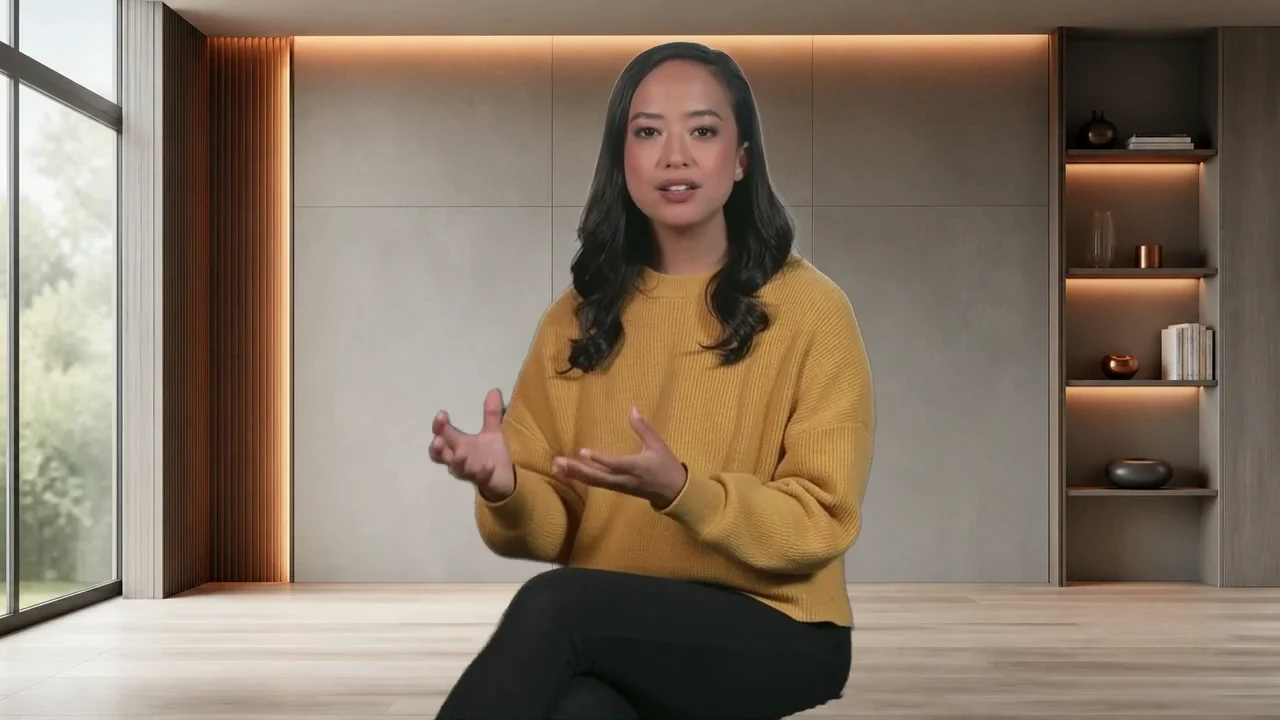
The above is hiapi's official demo material—a digital human lip-syncing a narration to the script, with no extra watermark added.
Should You Switch? Do the Math First, Don't Just Listen to One Side
Claims like "pay-as-you-go is cheaper" can easily become self-justification; the actual math isn't that absolute.
According to third-party figures (as of 2026-10; refer to HeyGen's official prices at the time), the HeyGen Creator subscription costs $29/month, or about $24/month when billed annually, and includes 600 credits. Used on the Avatar V tier, each minute costs 48 credits—so the whole month's quota works out to at most about 12.5 minutes of Avatar V video. Spread over that ceiling, the subscription's effective unit price is roughly $29 ÷ 12.5 ≈ $2.32/minute (monthly) or $24 ÷ 12.5 ≈ $1.92/minute (annual).
On hiapi's side it's $0.15/second × 60 = $9/minute (refer to the hiapi live pricing page for the exact rate; the page figures take precedence after any price adjustment). Looking at that number alone, per-minute it is indeed considerably more expensive than the subscription—but the subscription assumes you bought a whole month's quota, whether you use it all or not.
What really matters is the break-even point: $29 (monthly subscription price) ÷ $9/minute (hiapi unit price) ≈ 3.22 minutes. That means:
- If your actual monthly Avatar V video time is below about 3.2 minutes: pay-as-you-go saves money—you don't pay for a subscription you can barely use.
- If your monthly usage reaches near the 12.5-minute cap or beyond: the subscription wins, and pay-as-you-go total cost will overtake the monthly fee.
- In between (3.2–12.5 minutes): the difference is small; it comes down to whether you'll really use it fully and whether you want flexibility.
The conclusion isn't "which one is definitely cheaper," it's "how much do you actually need each month." Teams whose content volume isn't stable yet, or who just occasionally need a few promotional videos, are better off with pay-as-you-go; teams already producing digital human content at scale should just subscribe.
When to Choose hiapi, and When Not to Bother
- You need a few videos ad hoc and aren't sure about long-term use: choose hiapi, run pay-as-you-go first, and don't put down $29 just to test the waters.
- You want a unified integration path: if you're already using hiapi for other image/video models, heygen-avatar-v uses the same
/v1/tasksasync task API, so you don't need to integrate a separate HeyGen SDK. - Your monthly usage is consistently over 10 minutes+: don't pinch pennies—subscribe to HeyGen Creator or higher; the math really does come out cheaper.
- You need to generate a matching digital human from a photo: heygen-avatar-v is a preset avatar library driven by script/audio. If you want to create a digital human directly from a real person's photo, check out heygen-avatar-iv—the image-to-video variant on the same engine.
Integration Example
The simplest call—pass the avatar, script, and voice, then poll or use a callback once you have the task ID:
POST https://api.hiapi.ai/v1/tasks
{
  "model": "heygen-avatar-v",
  "input": {
    "avatar": "Abigail Sofa Front",
    "prompt": "Welcome to our digital human video service.",
    "voice": "Warm Pro Narrator",
    "resolution": "720p",
    "aspect_ratio": "16:9",
    "output_format": "mp4"
  }
}
After you get data.taskId, use GET /v1/tasks/:id to check the final state, or configure callback.url to receive notifications; once status=success, take the video URL with type=video from output. For full parameters (including the complete list of 497 avatars and 102 voices), see the model details page and the unified async API documentation.
FAQ
Is hiapi's heygen-avatar-v the same model as official HeyGen? Yes—it's the same HeyGen engine behind it. hiapi simply provides another access path with per-second billing; it is not a retrained or re-created technology.
Is per-second billing really cheaper than a monthly plan? Not necessarily—it depends on usage. Below about 3.2 minutes per month, pay-as-you-go saves money; near the 12.5-minute cap, the subscription is cheaper instead. See the math above.
Can I pass prompt and audio_url at the same time?
No—pick one: either pass prompt + voice for system dubbing, or pass audio_url to drive lip-sync with existing audio. Passing both will be rejected.
What's the maximum video length?
In audio-driven mode the cap is 600 seconds (32MiB); in script-dubbing mode there is no separate duration field—it's effectively limited by prompt's 5000-character maximum, so the longer the script, the longer the corresponding video.
Does it support Chinese dubbing?
prompt itself supports Chinese script, but as for which voice preset sounds best in Chinese, we recommend running a small test with a few real scripts first—don't just guess from the preset names.
One-Sentence Summary
The whole calculation comes down to one sentence: small volume, choose pay-as-you-go; large volume, choose monthly—it's the same HeyGen behind both. Before you decide, go to the heygen-avatar-v model details page and run a test with your own script first; that's more reliable than stockpiling a subscription or dismissing pay-as-you-go outright.
Related articles
View all articles →-

Comparison
Recraft v4.1 Flash Text-to-Image Horizontal Comparison: Developer Model Selection and Migration Guide
Use the $0.01 per-image cost and pure text-to-image capability to judge whether it fits your image generation pipeline
-

Comparison
hailuo-2.3-fast/image-to-video Side-by-Side Comparison: How to Choose an Image-to-Video Model and Key Migration Points
-

Comparison
Seedream 5.0 Pro Image-to-Image Side-by-Side Comparison: Capabilities, Pricing, and Selection Guidance