

Vidu
Vidu Q4 Preview
vidu-q4-preview/image-to-video
The first publicly available preview of the Vidu Q4 series, focused on character performance and native audio, supporting reference guidance from up to 15 images and 3 audio clips, and outputting video at up to 4K
Try vidu-q4-preview/image-to-video
Input
Showcases
View all showcasesOutput
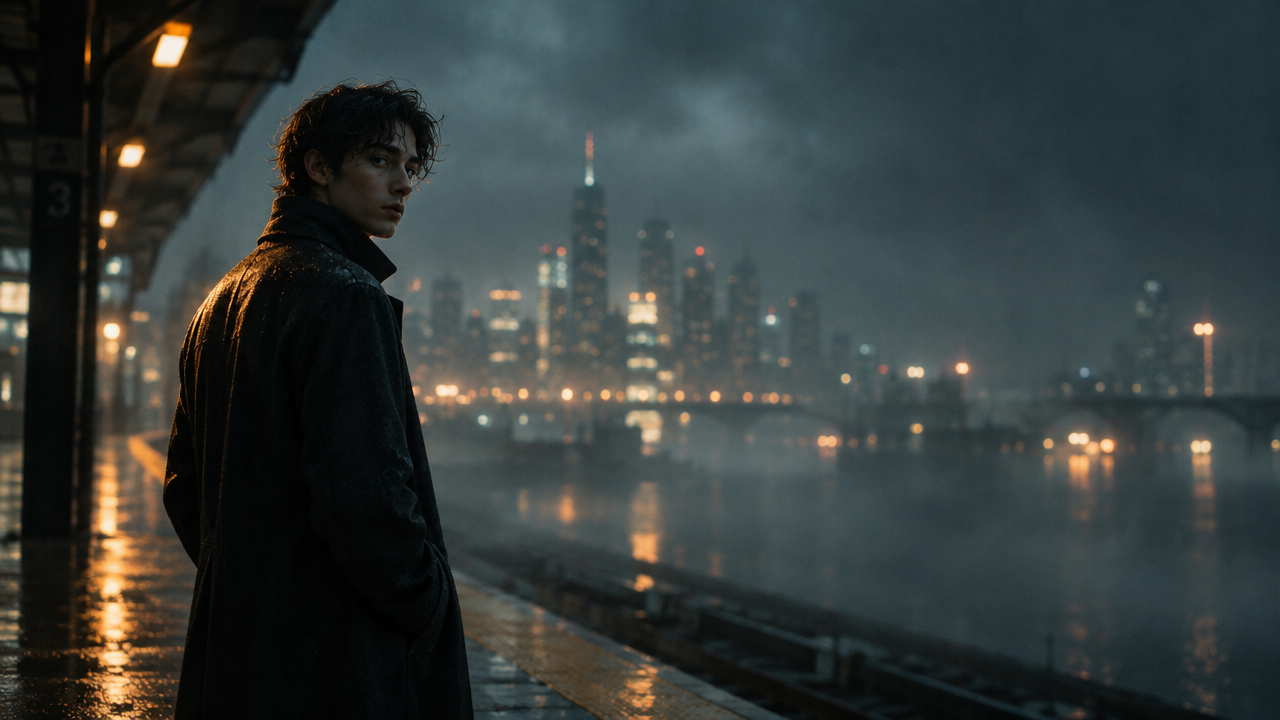
videoFirst-Frame-Driven Storyboard Concept Transformation: Vidu Q4 Image-to-Video Example
Style Storyboard · Cinematic · Image-to-Video
Reference inputs
image_url
Prompt
Animate from the first frame with a slow, cinematic push-in: the character in the storyboard frame lifts their gaze toward the camera, with slight breathing and a single blink, while hair and clothing flutter in a gentle breeze. The camera cranes slightly downward while parallax separates the foreground silhouette from the misty background; warm rim light moves across the face. Keep the character identity, clothing, and composition consistent with the reference image. Ambient indoor room tone and a soft low-frequency hum, natural synchronized sound effects, restrained pacing, suitable for a 5-second concept shot.
Copy the full prompt and adapt it for your own generation.
Tags
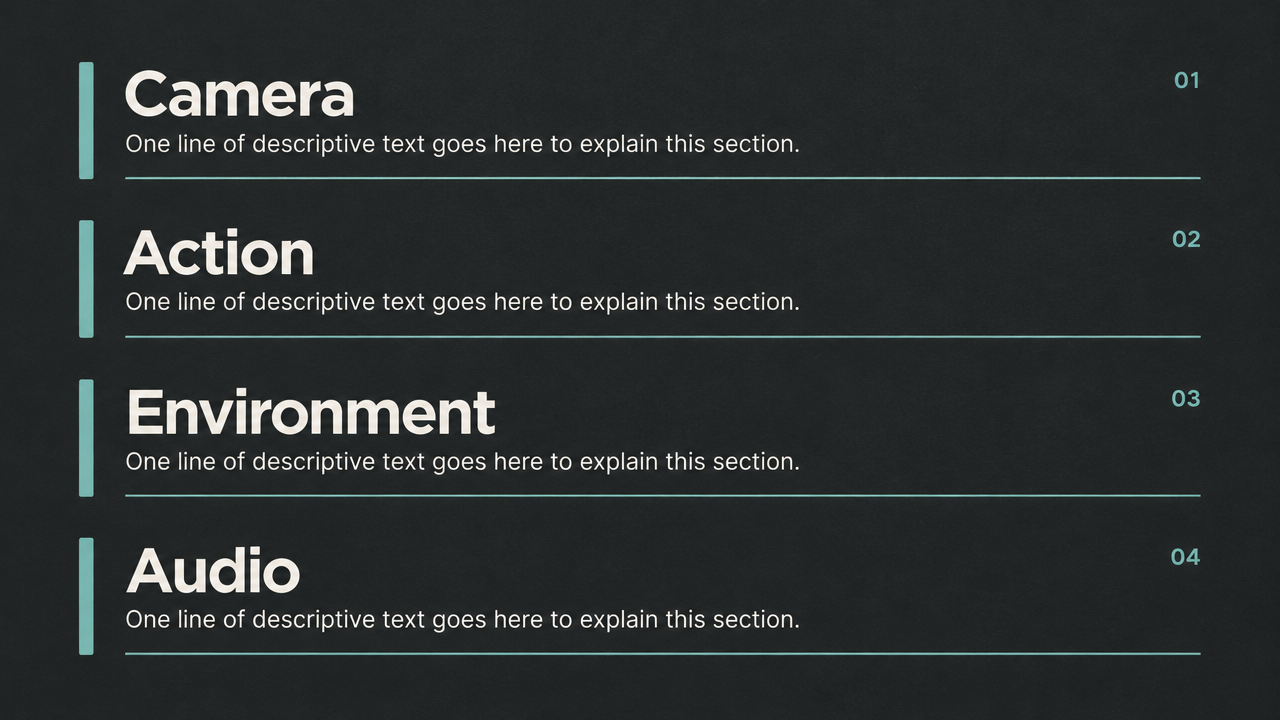
Vidu Q4 Prompt Formula Card: A Visual Guide to Structured Writing
Style Explanation · Motion Graphics · Prompt Engineering
Reference inputs
image_url
Prompt
A concise motion-graphics explainer shot: the camera starts on a flat-laid prompt formula card, then slowly pushes in and moves at an angle along the card. Four labeled blocks—camera language, subject action, environment and atmosphere, native audio—light up one after another, synchronized with subtle UI sound cues. Minimal editorial design, dark charcoal background, off-white typography, a single accent color, soft studio lighting, shallow depth of field, subtle paper texture. Steady and composed camera movement; calm technical pacing; 16:9 composition, with the card staying clearly legible throughout.
Copy the full prompt and adapt it for your own generation.
Tags
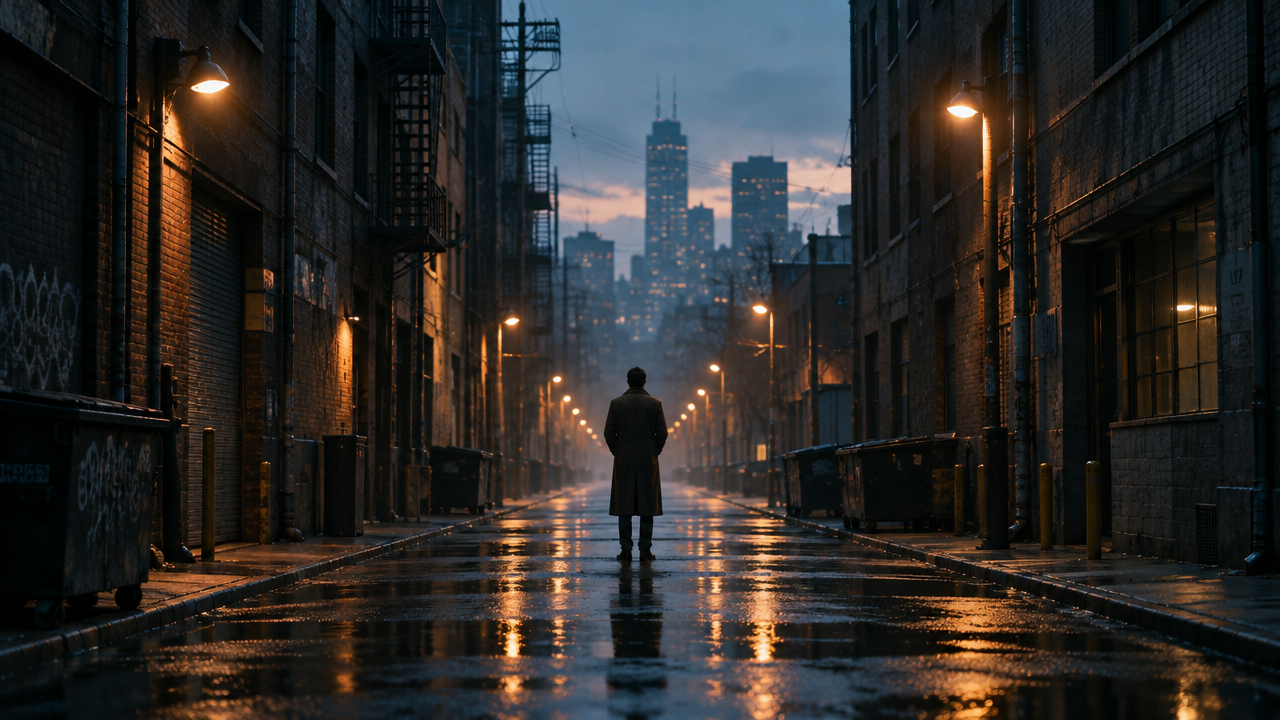
Visual Notes on Camera Movement Language: A First-Frame-Driven Single-Shot Demo
Style Camera Movement · Storyboard · Film Studies
Reference inputs
image_url
Prompt
A single continuous shot, beginning from a static cinematic first frame: a slow, steady dolly-in toward the subject, with camera height unchanged, shallow depth of field, a slight handheld micro-jitter, ambient indoor room tone and distant footsteps, controlled pacing, low-saturation teal-and-amber color grading, film grain, a 24fps look, no cuts, no text overlays.
Copy the full prompt and adapt it for your own generation.
Tags
First-frame-driven native-audio short film: Vidu Q4 Preview image-to-video
Style Image-to-Video · Role Performance · Native Audio
Reference inputs

image_url
Prompt
Cinematic medium close-up, the camera slowly pushes in, a female courier stands alone in a rain-soaked neon alley at night. She lifts her head from the phone screen and looks toward the camera; her breath is visible as white vapor in the cold air, and a strand of wet hair slides across her cheek. The camera advances at a steady pace, then shifts into a gentle handheld drift; shallow depth of field keeps the sodium-vapor bokeh behind her soft. As she exhales and turns slightly to the left, the rain catches the rim light. Mood: restrained, nocturnal, quietly tense; cool cyan shadows contrast with warm practical-light highlights.
Copy the full prompt and adapt it for your own generation.
Tags
Pricing
vidu-q4-preview/image-to-video per second
| Specifications | Unit Price |
|---|---|
| 540P | $0.0515 |
| 720P | $0.109 |
| 1080P | $0.1375 |
| 2K | $0.2175 |
| 4K | $0.446 |
Positioning Overview
vidu-q4-preview/image-to-video is the first preview release in the Vidu Q4 series, generating video with native audio starting from a first-frame image. The model supports durations from 3 to 16 seconds and output resolutions from 540p to 4K, with the aspect ratio following the first-frame image; motion, camera movement, and sound can be described via prompts. It suits developers who need character performance, cinematic language, and synchronized sound effects, for narrative short films, advertising pre-visualization, or multi-option pitches.
Key Highlights
- First-frame driven with native synchronized audio — The first-frame image locks in the composition and aspect ratio, and dialogue and sound effects are produced by default at generation time; audio output can also be turned off to produce a silent video.
- A single generation covers 3–16 seconds and 4K output — Duration and resolution parameters are adjustable within the same pipeline, from 540p to 4K as needed, reducing the need to stitch together long shots from segments.
- The Q4 preview focuses on expressive performance — Officially positioned as a comprehensive upgrade in character performance, cinematic language, and visual effects, suited to shots that demand continuity of motion and emotion.
Capabilities
First frame to video with sound: Pass in a single first-frame image to generate video, with the aspect ratio following the image; native audio is on by default, yielding dialogue and sound effects together, and turning it off produces a silent video.
Adjustable duration and resolution: A single generation can be set to any whole number of seconds between 3 and 16, and resolution supports five tiers—540p, 720p, 1080p, 2K, and 4K—so usage can be planned by output specification.
Prompts control motion and sound: Prompts can be up to 20,000 characters and can describe motion, camera movement, and sound, guiding both the visual dynamics and the audio content.
Clear image input limits: The first-frame image supports JPG, JPEG, PNG, and WEBP, up to 50MB, with an aspect ratio between 1:4 and 4:1, making it easy to validate assets before integration.
Use Cases
- Narrative short films for independent creators and small studios — Use a key frame as the first frame together with prompts to generate short clips with dialogue and sound effects that go straight into the editing workflow.
- Shot pre-visualization for ads and brand films — Drive generation from product images or storyboard frames at multiple resolutions, so clients can confirm camera position, pacing, and sound direction before formal production begins.
- Multi-option pitches for narrative shots — Adjust prompts and duration parameters against the same first frame to batch-output different performance or camera-movement options for internal selection.
Limitations and Selection Advice
This model is a Preview release, and the official documentation states that its capabilities and features will continue to change; it is not recommended as the sole dependency of a long-term, stable production pipeline. A single generation is capped at 16 seconds, so longer shots require segmented generation and stitching; input starts from a single first-frame image, and multiple reference assets cannot be mixed within one pipeline. If reference images or audio references are needed to maintain character and voice consistency, the reference-to-video pipeline in the same series should be used instead. When there is a hard requirement for multi-shot coherent storytelling or very long videos, other models that support longer durations or stronger consistency control should be evaluated.
Frequently asked questions
View all FAQs →-
Can I set the output aspect ratio?
No. The frame follows the first-frame image completely: landscape in, landscape out; portrait in, portrait out — so prepare a portrait frame when you want 9:16. The first frame's ratio must sit between 1:4 and 4:1; extreme slivers are rejected on submit.
-
What does the audio switch do?
Native audio is on by default and generates dialogue, ambience and effects in sync with the picture. Turn it off for a silent, picture-only clip — useful for looping backgrounds, your own soundtrack or burned-in captions. The switch does not change the price.
-
How do duration and billing relate?
Billing is the submitted whole-second duration times the per-second rate of the resolution you picked; the audio switch and the number of images are not priced. Higher tiers carry a higher rate — 4K is roughly 8.7 times the 540p rate — and the pricing page lists the current amounts.
-
What is each resolution tier good for?
540p for testing prompts and camera moves (and for small looping backgrounds), 720p for most social and web use, 1080p for regular paid placements, 2K for large screens and TV, and 4K for exhibition, cinema-grade picture or shots you plan to crop in post. Draft low, render the keepers high.
Create a generation task
https://api.hiapi.ai/v1/tasks Headers
AuthorizationstringRequiredAccount API key. Required on every request. Example: Bearer YOUR_HIAPI_API_KEY. Get your API key
Content-TypestringOptionalThe request body is always parsed as JSON; when sent, only application/json (optionally with charset) is accepted — any other value returns 415. Example: application/json.
Idempotency-KeystringOptionalIdempotency key, up to 255 bytes. Retries with the same key from the same account create the task only once; replays return the original taskId.
On network timeouts or client retries, the same key creates the task only once — no double charges (scope: the API key's account). Use a business-unique identifier as the key (e.g. "order-42"); replays return the original taskId, and keys expire 24 hours after the first request. See the Unified Async API overview for the full scenario matrix.
Body
modelstringRequiredCurrent fixed value: vidu-q4-preview/image-to-video
routestringOptionalCurrent fixed value: default
inputobjectRequired
Business parameters for vidu-q4-preview/image-to-video and route default — see the parameter table below.
audiobooleanOptionalDefault: trueControls whether to generate native audio synchronized with the video (dialogue and sound effects); boolean, set to false to output a silent video, defaults to true.
promptstringOptionalmaxLength 20000Optional. A prompt describing the visual motion, camera movement, and sound, up to 20000 characters.
durationintegerOptionalDefault: 5min 3max 16Video duration in seconds, an integer between 3 and 16, default 5.
image_urlstringRequiredminLength 1The address of the image to use as the first frame of the video; the output video preserves the aspect ratio of this image; supports JPG, JPEG, PNG, WEBP, size no more than 50MB, aspect ratio must be between 1:4 and 4:1.
resolutionstringOptionalDefault: "720p"The resolution of the output video, default 720p.
540p720p1080p2k4kcallbackobjectOptional
Terminal-state notification config. When omitted, no callback is delivered — poll the task yourself. See the callback note below.
Provide callback.url when creating a task and HiAPI POSTs to your service once the task reaches a terminal state — no polling needed. The callback payload mirrors the task detail structure; signature verification, delivery retries and idempotency are documented on the Unified Async API overview page.
urlstringRequiredRequired when callback is present. A POST is sent to this URL once the task reaches a terminal state; must be a valid http(s) URL.
whenstringOptionalDefault: "final"Only final is supported today — notified on both success and fail.
finalstoragestringOptionalDefault: "temp"Artifact storage tier: temp (default, retained about 7 days) or persistent (long-term, billed by size). Insufficient balance or exceeding the storage cap silently downgrades to temp; the effective tier is shown in the task detail response.
temppersistentRequest examples
# Submit an async task; returns a taskId immediately (no waiting for generation)
curl -X POST "https://api.hiapi.ai/v1/tasks" \
  -H "Authorization: Bearer $HIAPI_API_KEY" \
  -H "Content-Type: application/json" \
  -d '{
  "model": "vidu-q4-preview/image-to-video",
  "input": {
    "audio": true,
    "duration": 5,
    "image_url": "…",
    "resolution": "720p"
  }
}'
const res = await fetch("https://api.hiapi.ai/v1/tasks", {
method: "POST",
headers: {
Authorization: `Bearer ${process.env.HIAPI_API_KEY}`,
"Content-Type": "application/json",
},
body: JSON.stringify({
model: "vidu-q4-preview/image-to-video",
input: {
"audio": true,
"duration": 5,
"image_url": "…",
"resolution": "720p"
}
}),
});
const task = await res.json();
// { code: 200, message: "success", data: { taskId } }import os, requests
res = requests.post(
"https://api.hiapi.ai/v1/tasks",
headers={"Authorization": f"Bearer {os.environ['HIAPI_API_KEY']}"},
json={
"model": "vidu-q4-preview/image-to-video",
"input": {
"audio": True,
"duration": 5,
"image_url": "…",
"resolution": "720p"
}
},
)
print(res.json()) # { code, message, data: { taskId } }200 OK
{
  "code": 200,
  "message": "success",
  "data": {
    "taskId": "tk-hiapi-01HZTQ8BX2N3GM3YFK4Z9D7VQR"
  }
}
400 Bad Request
{
  "code": 400,
  "message": "invalid request",
  "data": null,
  "error_code": "INVALID_REQUEST"
}
Get task detail
https://api.hiapi.ai/v1/tasks/:id Response fields
taskIdstringRequiredTask ID, always prefixed with tk-hiapi-.
modelstringRequiredResolved full model name. Tasks submitted with the route parameter return base@route (e.g. gpt-image-2/text-to-image@ext); otherwise identical to the name passed at creation.
routestringOptionalPresent only when the task was submitted with an explicit route parameter; echoes the submitted value.
statusstringRequiredTask status.
queued Queued, not started yet.
handling Being processed.
archiving Processing finished, artifacts being prepared.
success Terminal: completed, artifacts available (output returned).
fail Terminal: failed (error returned).
After submission, check status: success and fail are terminal, everything else is non-terminal. Poll every 1–3 seconds until terminal. On success, download artifacts from output[].url and transfer them before expireAt; pass storage: "persistent" at creation time when long-term retention is needed.
creatednumberRequiredTask creation time (Unix seconds).
completednumberRequiredUnix seconds when the task reached a terminal state; fixed to 0 while not terminal.
outputarrayOptional
Present only when status == success. Artifact list — always an array; a single task may return multiple types at once (e.g. video + first_frame).
Array [ object ]
Array items
urlstringRequiredArtifact URL, directly downloadable.
typestringRequiredCurrent possible values: video, image, audio, first_frame, last_frame, thumbnail; more may be added later.
expireAtnumberRequiredUnix seconds until which the artifact remains accessible; download or transfer before it expires.
errorobjectOptional
Present only when status == fail.
codestringRequiredBusiness error code.
messagestringRequiredError description.
Response examples
Success
{
  "code": 200,
  "message": "success",
  "data": {
    "taskId": "tk-hiapi-01HZTQ8BX2N3GM3YFK4Z9D7VQR",
    "model": "happyhorse-1-0",
    "status": "success",
    "created": 1777282033,
    "completed": 1777282099,
    "output": [
      {
        "url": "https://cdn.hiapi.ai/tasks/.../video.mp4",
        "type": "video",
        "expireAt": 1777886899
      }
    ]
  }
}
Processing (non-terminal)
{
  "code": 200,
  "message": "success",
  "data": {
    "taskId": "tk-hiapi-...",
    "model": "happyhorse-1-0",
    "status": "archiving",
    "created": 1777282033,
    "completed": 0
  }
}
Failed
{
  "code": 200,
  "message": "success",
  "data": {
    "taskId": "tk-hiapi-...",
    "model": "happyhorse-1-0",
    "status": "fail",
    "created": 1777282033,
    "completed": 1777282099,
    "error": {
      "code": "TASK_FAILED",
      "message": "task failed"
    }
  }
}Articles
View all articles →Related Models
View all models →Same Type
-
 Hailuo 2.3 MiniMax $0.270 /video
-
 Kling 3.0 Kuaishou $0.100 /second
-
 FLUX 3 Video Black Forest Labs $0.090 /second
-
 Runway Gen 4.5 Runway $0.172 /second
-
 HeyGen Avatar IV HeyGen $0.150 /second
-
 Grok Imagine 1.5 Lite xAI $0.029 /second
-
 Vidu Q3 Vidu $0.149 /second
-
 Gemini Omni Google --
-
 HappyHorse 1.0 Alibaba $0.168 /second
-
 Wan 3.0 Video Alibaba $0.040 /second
-
 PixVerse V6 PixVerse $0.036 /second
-
 Seedance 2.0 ByteDance $0.017 /second