
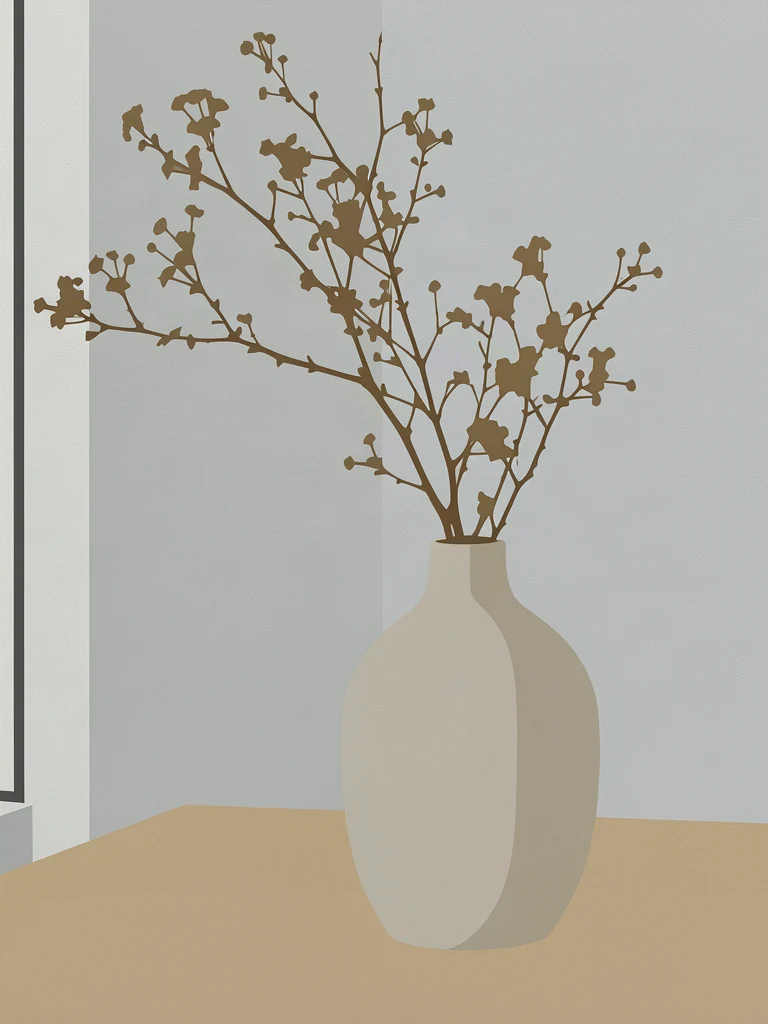
From Realistic to Flat: FLUX.2 klein Single-Reference Style Spectrum
Using a single realistic still-life photograph as the only reference image, this piece leverages the single-reference editing capability of FLUX.2 [klein] 9B to push the same composition across a three-stage style spectrum: "realistic → semi-flat → minimalist flat." The work verifies how controllably the model can compress tonal range, generalize edges, and simplify shapes when given only one reference image and without additionally attaching a LoRA or style model. In terms of composition, the reference image is first generated by the pipeline: a still life of a ceramic vase with dried branches under natural light, ensuring clear forms and ample material layering, making it easy to observe which details are preserved and which are abstracted during stylization. Then, using the same prompt skeleton and swapping only the style adjectives, a semi-flat version retaining volume and texture and a flat version with lighting and shadow removed, texture removed, and only solid color blocks and bold outlines remaining are obtained respectively. Applicable scenarios: early-stage style exploration for illustration and visual design, style-tier test shots for brand illustration guidelines, and batch style consistency for social media and editorial imagery. It is recommended to use aspect_ratio=1:1 to keep the framing consistent with the original image, and to set num_inference_steps to the default 4 steps for rapid iteration; raise it to 6–8 steps when smoother gradients and edges are needed.
Style Illustration · style-transfer · Editorial Art
Model FLUX.2 Klein 9B
Reference inputs
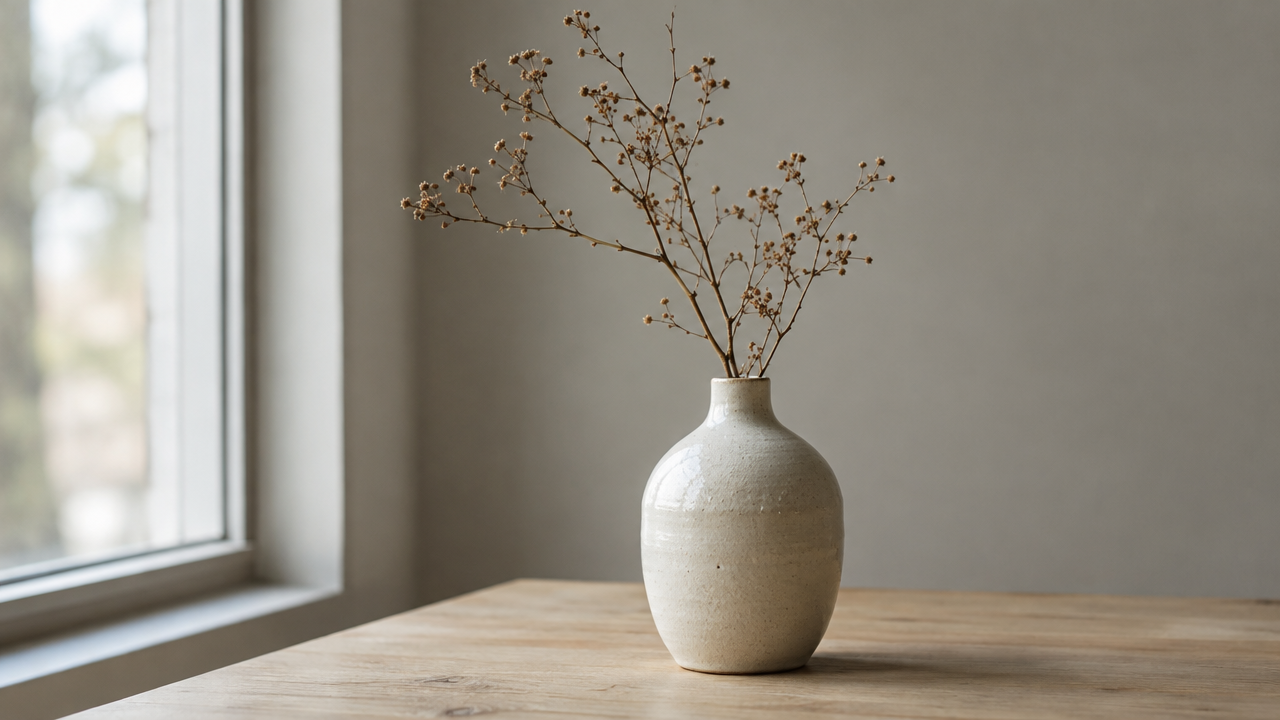
image_urls
Prompt
Image-to-image style transfer of a still-life photograph: on a clean, plain tabletop by a window sits a matte ceramic vase holding dried branches. Convert the original photograph into a flat vector illustration: compress the tonal range into a limited palette of 5–6 low-saturation colors, replace gradients with solid color blocks, simplify edges into clean, crisp outlines, remove texture and specular highlights, and keep the original composition, silhouettes, and object positions unchanged. Overlay a subtle paper-grain texture to achieve an editorial poster style, with balanced negative space and no text.
Copy the full prompt and adapt it for your own generation.
Tags