
Tutorial
mirelo-sfx-2.0 in Practice: 5 High-Value Application Scenarios and Integration Essentials for Audio Models
From per-second billing to business deployment: scenario breakdown and implementation essentials from a developer's perspective

Why audio models deserve their own model selection
In the tech stack, the integration patterns for text models and image models are relatively mature: input a prompt, output tokens or pixels, with clear billing dimensions. Audio output models, however, are often lumped under "multimodal" and glossed over—until teams actually need to produce sound effects, voiceovers, or dynamic audio, only to discover that their integration constraints are completely different.
The core difference lies in the unit of measurement for the output. Text is billed by token, images by count or resolution, while the natural unit for audio is duration (seconds). This means a single call does not produce "one result" but "a timeline that can be long or short," and cost grows linearly with audio length rather than with the number of calls. This directly changes how you estimate: you cannot just count QPS; you must count "total generated seconds."
The second difference is that generation time correlates with duration. A clip of tens of seconds often cannot return within the timeout window of a conventional synchronous request, so audio models are naturally better suited to an asynchronous task pattern: submit a task, poll or receive a callback, then obtain the output URL. This is easily overlooked during prototyping and only surfaces in production as timeouts and retry storms.
The third difference is that outputs need to be stored and reused. Audio files are much larger than text, and the same sound effect is often reused repeatedly in business. Without caching and asset management, repeated generation directly amplifies the cost of per-second billing.
So audio models deserve a dedicated model selection: it is not a casual "add a modality" job, but an independent pipeline of asynchronous generation plus asset management. Take mirelo-sfx-2.0 as an example: the output type is audio, and billing is based on output seconds—this determines the engineering shape of all the scenarios that follow. The criterion for deciding whether to include it in your tech stack is also practical: does your business have a step that "needs a playable sound," and can the duration and call frequency of that sound be measured and constrained?

Figure out the cost first: what per-second billing means
The essence of per-second billing is replacing the cost function "number of calls × unit price" with "output seconds × price per second." This conversion looks simple but significantly changes the shape of the budget model.
Cost formula
Cost per call ≈ output audio seconds × price per second. Monthly cost ≈ total generated seconds in the month × price per second. Note the key word is output: what determines the bill is how long the audio you ultimately receive is, not how many requests you initiate. One 30-second sound effect and thirty 1-second sound effects are equivalent in the seconds dimension, but completely different in call overhead, cache hit rate, and engineering complexity.
Three places that easily spiral out of control
First, retry amplification. Asynchronous task failure retries, repeated user clicks, and erroneous frontend polling triggers all cause the same audio to be generated multiple times. If every failure reruns the whole task, the bill doubles with the number of retries.
Second, linear inflation for long audio. Double the audio length and the cost doubles—there is no diminishing marginal cost. For long-content scenarios such as podcasts and audiobooks, you must calculate the total duration clearly before deciding whether to generate everything.
Third, the long tail of experimental calls. A/B experiments and material trial-and-error often generate large numbers of short clips. Each one seems cheap, but after multiplying by versions and clips, the total is considerable.
Estimation approach
Before integration, it is advisable to build a simple cost model: use "average duration per audio × expected daily generated count × 30" to estimate monthly total seconds, then multiply by the unit price. At the same time, add two constraints: set a maximum duration cap per task, and set a monthly seconds quota alert. This turns the budget discussion from "does it feel expensive" into "can we bring total seconds down." The means of reducing cost are also clear: reuse caches, shorten default durations, and call the model only for necessary clips—for specific unit prices, refer to the site's price panel; what engineering should watch is the variable of seconds.
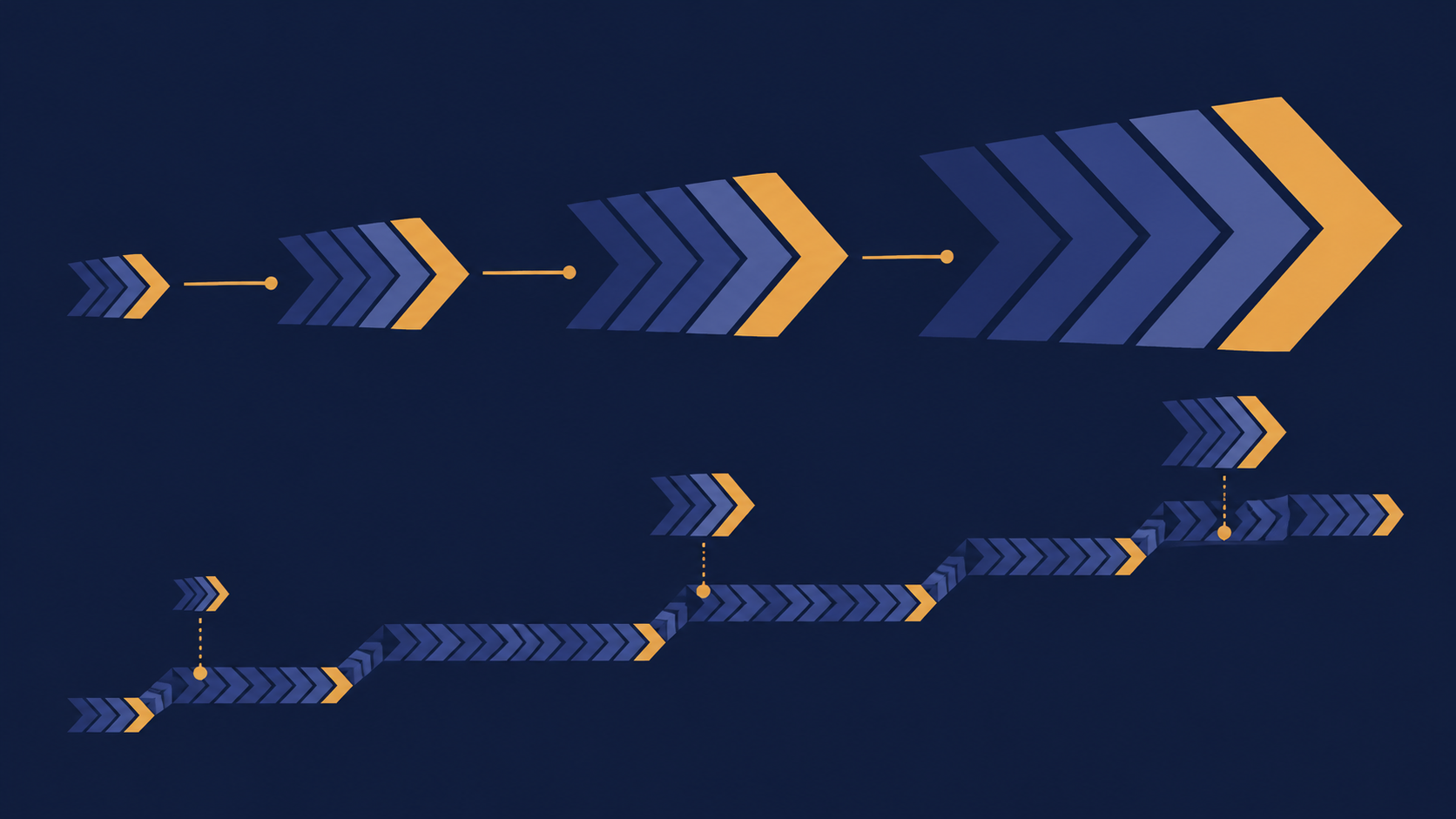
Scenario 1: Batch sound effect generation for short videos and ads
The content production pipeline is the deployment scenario where audio models most easily show ROI: templated short videos, feed ads, and e-commerce main-image videos have a demand for sound effects that is "high volume, homogeneous, and batchable."
Implementation form
Embed audio generation into the existing rendering pipeline: once the material template is determined, break out sound effect requirements by shot or scene (transitions, clicks, ambient beds), submit generation tasks in batches, write outputs to object storage and record them in the asset library, and finally have the rendering service reference them by ID. The key is decoupling audio generation from video rendering, running both in parallel so audio does not slow down the entire pipeline.
Concurrency control
The most common mistake in batch scenarios is firing hundreds of tasks all at once. A more stable approach is to maintain a bounded task queue, submit at a steady rate according to the concurrency limit, and route failed tasks into a separate retry queue with a retry limit. Each task carries a business ID and an idempotency key to prevent duplicate generation.
Cache reuse
Sound effects are highly reusable assets. It is recommended to generate cache keys from "sound effect semantics + duration + parameters" and return the existing output URL directly on a hit. The same batch of video templates often shares the same set of sound effects, so the cache hit rate can be very high—this is the most effective way to save money under per-second billing.
Delivery essentials
On the output side, unify formats and naming conventions, and retain generation parameter metadata for later replacement and traceability. Batch scenarios do not pursue extreme per-clip creativity but rather stability, reproducibility, and batch replaceability—treat the audio model as a sound effect asset factory, not a creative tool.
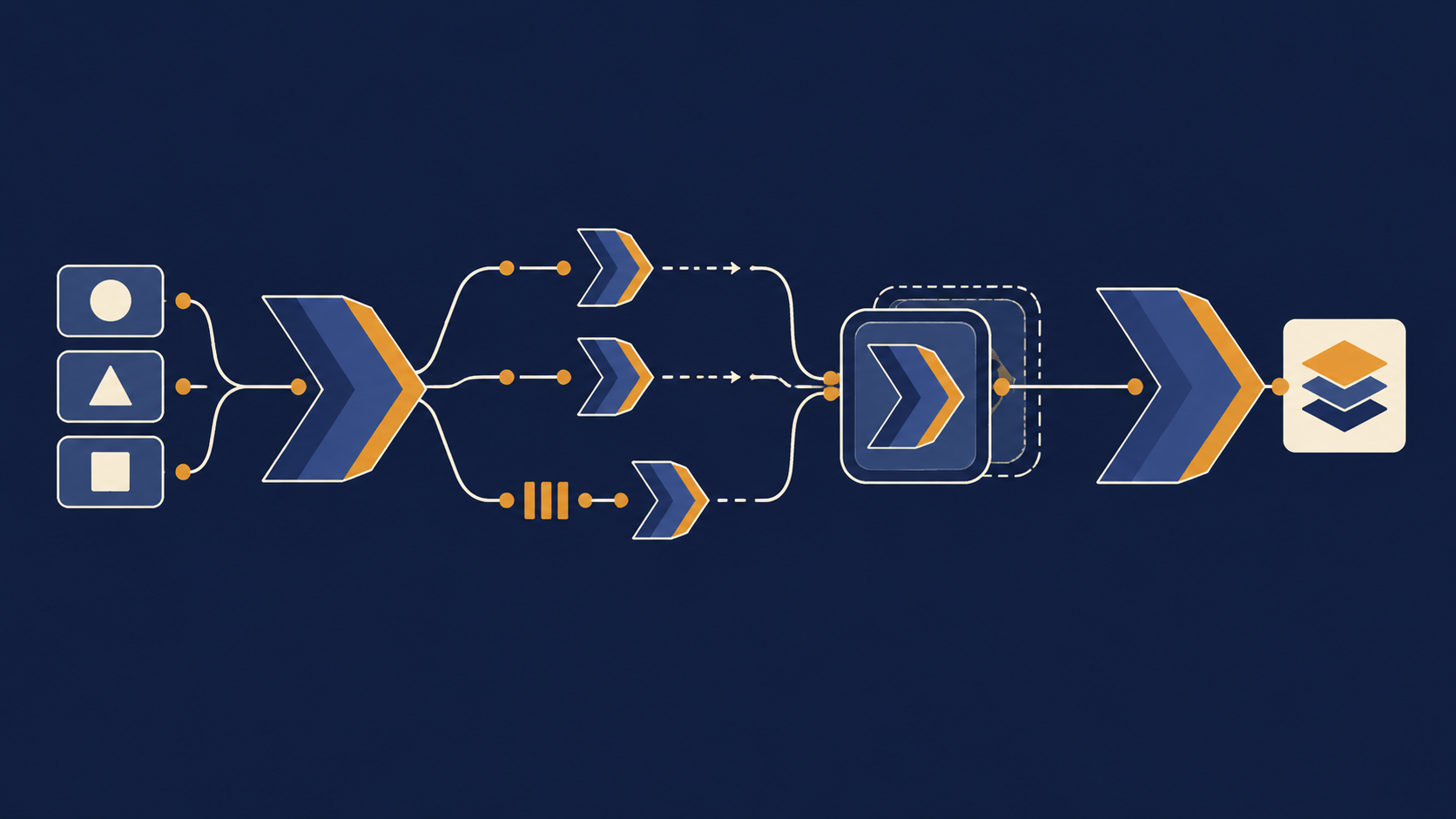
Scenario 2: Dynamic sound effects for games and interactive products
The demand for sound effects in games and interactive products is event-driven: picking up items, casting skills, UI feedback, ambient atmosphere—each event corresponds to a sound. The easiest misjudgment in such scenarios is equating "event-driven" directly with "real-time model calls."
The mapping layer from events to audio
The correct form is to add a mapping layer between events and the model: game events carry only semantic tags (such as "metal collision - short and sharp"), and the mapping layer looks up the table to obtain the audio asset. Only when no match is found does it go through model generation, and the result is written back to the asset table. In this way, the vast majority of interactions load resources locally or from a CDN rather than making network generation requests.
Why you cannot call the model on every interaction
Audio generation is inherently asynchronous, with latency far exceeding the game frame budget; meanwhile, players expect millisecond-level sound effect response. Therefore the cache layer is not an optimization item but a precondition for correctness. Pre-generating common sound effects, packaging by scene, and warming up during the loading phase are standard practices for such products.
The value boundary of on-demand generation
On-demand generation still has value, but it concentrates in two categories: first, long-tail events (combo skills, rare items) with low trigger frequency that are not worth pre-generating; second, dynamic variants (pitch and duration slightly adjusted with state) that require some differentiation. For these two categories, set a generation budget and cooldown time to avoid a spike in seconds caused by high-frequency player actions.
Engineering constraints
Add priority and degradation to generation tasks: high-priority events may block and wait, while low-priority events silently degrade to silence or a placeholder sound after timeout. All generation results must be written to the asset table with version numbers for easy rollback.
Scenario 3: Audio assets for spoken content and podcasts
Long audio is a hard requirement for spoken content, podcasts, and course audio, and it is also the scenario where cost under per-second billing most needs careful calculation. The core principle is: do not try to generate an entire long audio in one go.
Segmented generation
Split long audio into several segments by semantics or time (such as by chapter, by paragraph, or by a fixed seconds cap), and submit each segment as an independent generation task. Segmentation has three benefits: controllable per-task duration, failure retries affecting only a single segment, and adjustable parallelism. Align segment boundaries with semantic breakpoints as much as possible to reduce abruptness at the joins.
Concatenation and consistency
After segmented generation, concatenation is needed. Concatenation is not just binary merging; it also requires handling consistency of sample rate, channels, and loudness, as well as silence padding between segments. It is advisable to perform a quality check before and after concatenation: verify that each segment is complete, the duration matches expectations, and there are no pops or breaks at the joins.
Quality verification process
Rework costs for long content are high, so verification must be front-loaded. A feasible process: first generate a few sample segments and listen to confirm style and parameters, then generate in batches; during the batch phase, perform automated checks (duration deviation, silence detection, file integrity), with manual spot checks only.
Cost control
The total seconds for long audio are large, so any waste is amplified. Three measures: first, set a maximum duration per segment to prevent individual segments from stretching abnormally; second, support resuming from checkpoints so completed segments are not regenerated; third, include both final outputs and segmented outputs in the cache so subsequent revisions only regenerate changed segments. Only then can long-content scenarios be sustainable.
Scenario 4: Sound effect supplementation for education and presentation materials
The question small teams ask most often is: is this model actually useful to us? In low-frequency scenarios such as education, training, and presentation materials, the answer should not come from discussion but from a low-cost prototype validation.
Three steps of prototype validation
Step one, define a real small need: for example, page-turn sounds, notification sounds, and correct/incorrect feedback sounds in a set of courseware. Step two, generate only a few sample clips—each kept very short—covering all sound effect types. Step three, have actual users try them and give a judgment: is it sufficient, does the style match, is it better than the existing asset library.
Why this scenario is suitable for a first trial
Low frequency and short duration mean the total seconds are small and trial-and-error cost is controllable; at the same time, such materials do not demand high "perfection" and value consistency and usability more—exactly the comfort zone of audio models. Validating with small samples can quickly answer the decision question "is it worth further investment."
Engineering advice for small-scale trials
Even for a trial, it is advisable to follow the formal integration path: submit tasks through a unified interface, obtain outputs asynchronously, and store samples in the asset directory with recorded parameters. In this way, trial code can evolve directly into production code, avoiding "one set for the demo, a rewrite for launch."
Decision criteria
Set scale-up conditions in advance, for example: the sample usability rate reaches expectations, the manual time saved per asset replacement drops noticeably, and total seconds stay within budget. If the conditions are met, expand to all courseware; if not, stop at the sample stage—this is far more rational than generating everything at once and then cutting the budget afterward.
Scenario 5: Rapid experimentation with marketing and operations materials
Marketing materials are characterized by many versions, short lifecycles, and the need for rapid trial and error. The value of audio models here is not "making the best sound" but "making enough candidates at acceptable cost."
Parallel variant generation
Split a material iteration into several variants: prompts of different styles, versions of different durations, and different emotional tones. Submit generation tasks in parallel to obtain a set of candidate tracks, then enter the evaluation phase. Note that the number of variants must be capped; otherwise seconds will inflate linearly with the number of variants.
Evaluation and screening
After candidates are generated, they need rapid screening. A feasible approach: first perform machine-judgeable checks (duration, format, silent segments), then have a small group of users or operations staff listen and score, keeping only the few best-performing versions for formal launch. Separate "generation" from "launch" to prevent unscreened materials from going live directly.
Balancing iteration speed and cost
The cost control approach in experimental scenarios differs from earlier ones: instead of compressing per-clip duration, it is about compressing ineffective variants. It is recommended to record the total generated seconds and final adoption rate for each round of experimentation, and use "adoption rate" to measure input-output. If the adoption rate is low for several consecutive rounds, it means the prompt strategy or requirement definition has problems, and the strategy should be changed before continuing generation.
Asset accumulation
The large number of candidates produced by experiments should not be discarded directly. Archive unused but qualified tracks into the asset library and tag them so subsequent campaigns can reuse them directly and reduce duplicate generation. This accumulation mechanism is key to long-term savings in marketing scenarios.
From prototype to launch: integration checklist and common pitfalls
Extracting the commonalities of the five scenarios above, the engineering capabilities that need to be completed before launch roughly fall into four layers.
Request handling layer
Confirm the asynchronous task pattern: submit a task to get an ID, obtain the result via polling or callback, and set a reasonable timeout. All requests carry idempotency keys to prevent duplicate submissions. Limit the maximum audio duration per task—reject directly when exceeded rather than letting the model finish and then truncating.
Cache and asset layer
Establish a cache keyed by "semantics + duration + parameters" and reuse directly on a hit. Store outputs in object storage, retain generation parameters and version numbers, and support replacement and rollback. The cache layer is the first gate for saving money in audio scenarios.
Monitoring and cost layer
Monitor three metrics: task success rate, average generation duration, and cumulative generated seconds in the current month. Set alerts based on the seconds quota rather than looking only at call counts. Count retries separately; an abnormal increase usually means upstream instability or incorrect parameters.
Degradation and fault tolerance layer
Define a degradation plan for each call point: return a placeholder sound or silence on timeout, skip non-critical scenarios directly, and block and wait only for high-priority scenarios. Limit retry counts and backoff strategies to avoid failure amplifying cost.
Common pitfalls
First, treating audio generation as a synchronous interface, causing timeouts; second, regenerating the same sound effect without cache; third, ignoring segmentation for long audio, letting per-task duration spiral; fourth, counting only call volume and not seconds, discovering budget overruns only afterward; fifth, retries without idempotency, causing the same audio to be billed multiple times. Check item by item and you can basically avoid most launch incidents. The engineering difficulty of audio models lies not in the call itself but in the entire set of constraints built around "seconds."
Related articles
View all articles →-

Tutorial
How to Call hailuo-2.3-fast/image-to-video via the HiAPI API: curl and Python
A first working request for the fast, low-cost image-to-video tier — from model ID to downloaded MP4
9 min read -

Tutorial
How to Use hailuo-2.3/text-to-video via the HiAPI API: curl, Python, and a Working Request
11 min read -

Tutorial
Kandinsky 6.0 Pro Text-to-Video on HiAPI: curl and Python Tutorial
A request-first walkthrough: build the prompt-to-clip call, submit it, poll for completion, and download the result
11 min read