
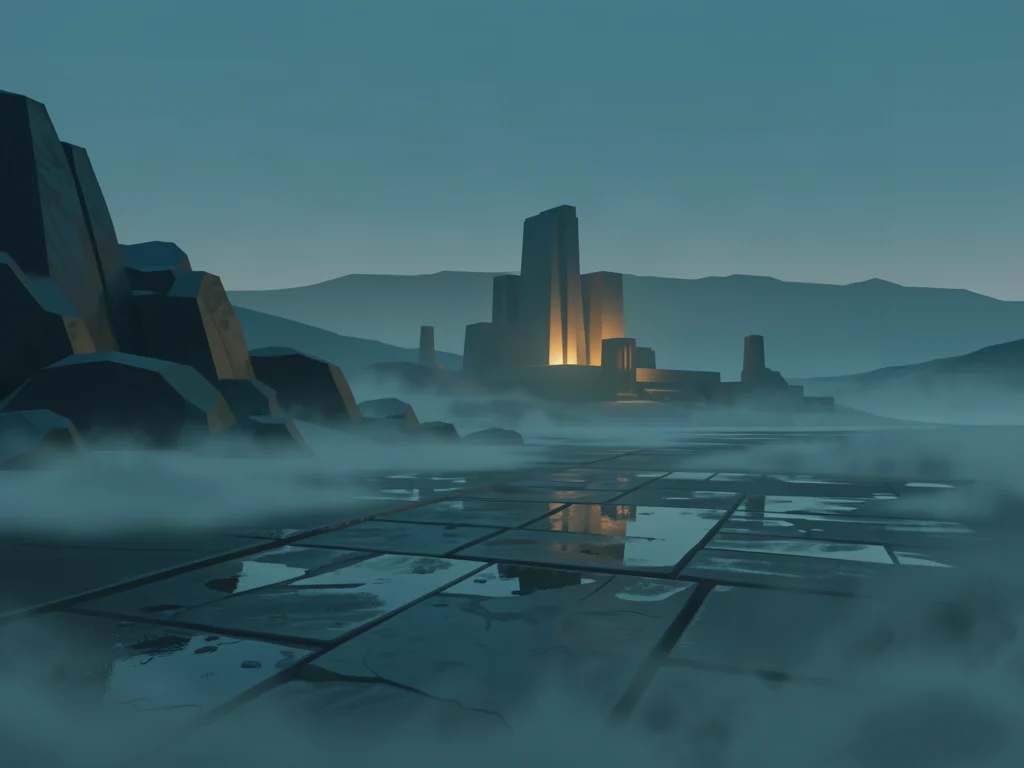
World Atmosphere Concept Frames: Scene Concept Art Driven by a Single Reference Image
This piece uses the single-reference-image editing capability of FLUX.2 [klein] 9B to demonstrate the "scene concept art" workflow for visual exploration of a world: first, a low-detail base scene image establishes the composition, horizon line, and subject placement; then, editing prompts push it toward a specific time of day, climate, light source, and material texture, rapidly producing multiple atmosphere variants under the same composition. Structurally, there is only one reference image input and one editing instruction: the reference image handles the spatial structure, while the prompt handles light direction, fog density, color tone, and materials (such as wet stone slabs, rusted metal, and diffuse skylight). In the schema, aspect_ratio is set to 16:9 to match the horizontal composition typical of concept art, and the inference step count uses the default 4 steps, fitting the model's low-latency characteristics after step distillation and making it suitable for batch atmosphere iteration on an RTX 4090-class workstation. Use cases: atmosphere exploration in film/game pre-production art, mood boards for levels and scenes, and visual references during script read-throughs; it is also suitable for developers as a minimal invocation example of image-to-image with a reference image plus an editing prompt, to observe the balance between reference image fidelity and prompt strength.
Style Concept Art · Worldbuilding · Cinematic
Model FLUX.2 Klein 9B
Reference inputs
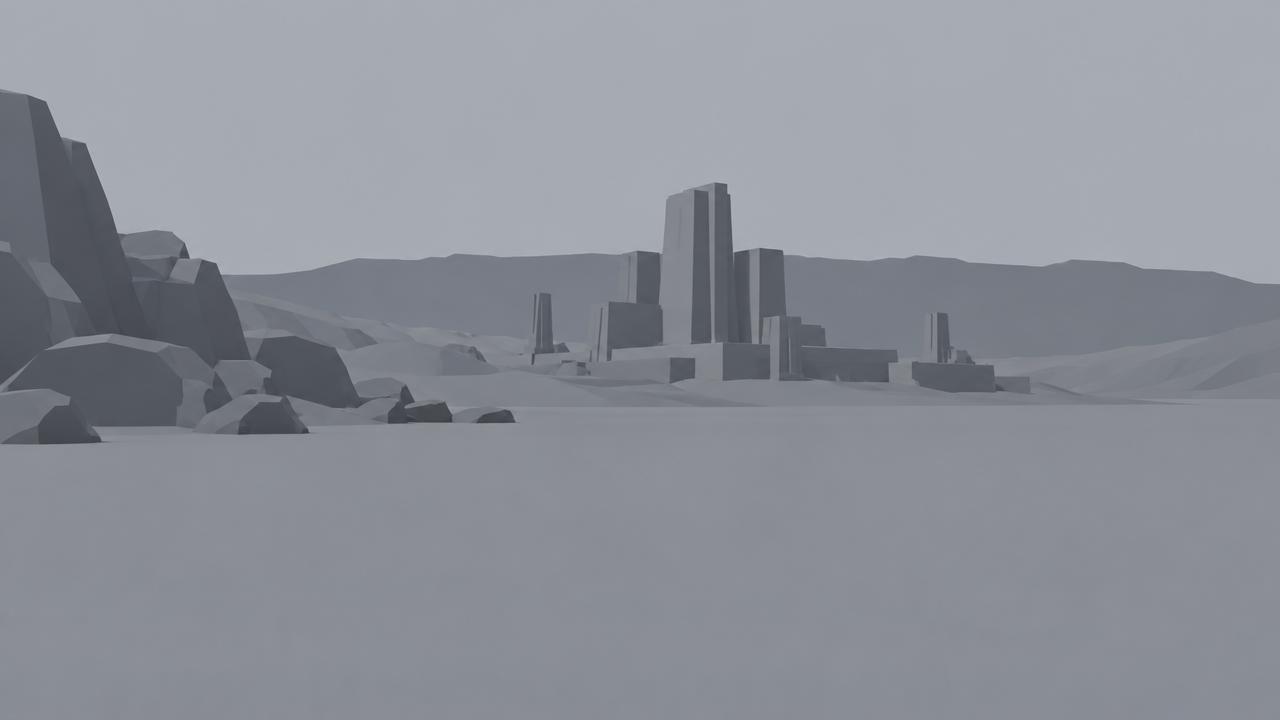
image_urls
Prompt
Edit the reference image into a cinematic world-building concept frame: keep the original composition, horizon line, and building masses unchanged, then push the atmosphere toward cool-toned blue hour. Add low, drifting ground fog that gathers in the lower third of the frame; emit a single warm amber light source from the central building, rim-lighting its edges; and give the wet, reflective stone surfaces subtle puddles. Shift the palette toward desaturated teal-green and slate gray with a single warm accent, soften the sky into a flat overcast gradient, and keep the render matte and painterly, like concept art rather than photorealism. 16:9 widescreen composition with strong depth layering from foreground silhouettes to distant ridges, no text, no people.
Copy the full prompt and adapt it for your own generation.
Tags