
Prompt formula card: a structured approach to image-to-video
Use Kling 4.0 Flash's image-to-video capability to make a dynamic explainer for a "prompt formula card": first, the pipeline generates a 16:9 typographic card as the first frame, breaking the composition of a structured prompt into readable layers—subject and scene, action, camera movement, lighting and mood, and audio. Once the layout of the first frame is set, use image-to-video to turn the static card into a moving shot with a slight push-in and details emerging, so viewers can grasp "what to write first and what to write next" within seconds. This piece follows the real input path of image-to-video: image_urls carries the first frame (generated from source material in this work), prompt describes the camera movement and pacing, duration is kept within the short-clip range, and resolution is set to 720p. Kling 4.0 Flash is positioned as a lightweight, fast version: 3 to 20 seconds per generation, up to 720p, 8-bit SDR, and no first/last frame or multi-keyframe control—so this piece focuses on single-frame layout and camera language rather than relying on keyframe scheduling. This spec suits batch production of short vertical or horizontal social media content, rapid iteration of hook shots, and low-cost creative drafts before final rendering.
Style Motion Graphics · Explanation · Social teaser
Model Kling 4.0 Flash
Reference inputs
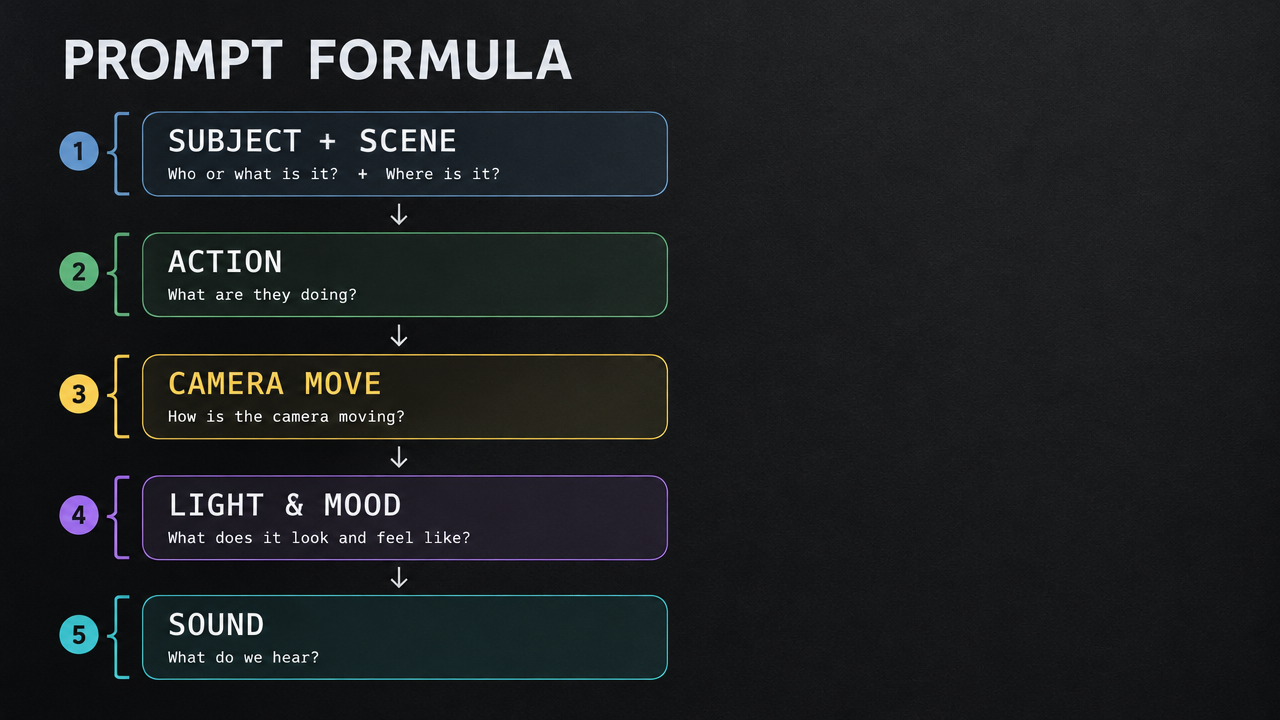
First frame image
Prompt
Generate an image-to-video from a static typographic formula card. Camera: a slow, steady push-in with barely perceptible parallax, no handheld shake, no whip pans. Motion language: the layered text blocks on the card appear one after another in a staggered rhythm, a faint highlight sweeps across the key formula lines, and small arrow and bracket graphics draw themselves in with clean vector precision. Lighting: soft neutral studio light with a gentle vignette, high legibility, no flicker, no chromatic aberration. Mood: calm, technical, editorial. Pacing: one continuous 5-second beat, with motion concentrated in the first two seconds, then settling into a near-still hold so the text stays readable. Keep all typography crisp and free of blur; avoid warped, melted, or regenerated glyphs.
Copy the full prompt and adapt it for your own generation.
Tags