
Tutorial
Hyper3D Rodin 2.5 Text-to-3D in Practice: 5 High-Value Application Scenarios and Integration Essentials
From game assets to e-commerce display: approaches and engineering considerations for integrating text-to-3D into real business

On this page
Why Text-to-3D Is Worth Integrating into Your Business Now
The traditional 3D asset production pipeline is long: concept sketch, concept art, modeling, UV unwrapping, texturing, rigging, export — every step depends on skilled artist labor, and a prop of moderate complexity is often measured in days. What text-to-3D changes is not the endpoint of this pipeline but its starting point: a single description can produce a usable first draft of a 3D asset within one call, turning "build from scratch" into "revise from a first draft."
This is exactly its current value proposition — not replacing 3D artists, but front-loading and compressing repetitive, low-value-density modeling labor. What teams really save is not artist salaries but validation cost: whether a level layout idea can be running by this afternoon, whether a product description can show a 3D result the same day, whether a teaching concept can get a model while preparing a lesson. When validation cost is low enough, the number of trials rises, and the iteration speed of product quality changes accordingly.
This article uses hyper3d-rodin-2.5/text-to-3d as an example. It is a text-to-3D model available on HiAPI.ai, with output type 3D and capability text-to-3d, called through a unified interface without integrating with multiple providers separately. The scope of the following discussion is: usage and acceptance criteria in five real business scenarios, how to get one call working end to end, how to estimate cost, and the pitfalls in engineering details such as format, topology, and texturing. The judgment criterion is always the same question — is this requirement worth doing with text-to-3D.

Integration Approach: How to Get One Call Working End to End
In the context of an aggregated API, the call pattern for text-to-3D is very similar to text-to-image: submit a text description, specify the model, get the result. The main difference is result size — 3D assets are usually model files of a few MB to tens of MB, and the server needs to generate them and then write them to storage, so result delivery is generally asynchronous.
A typical flow has three steps. First, the client initiates a generation request carrying the prompt and model identifier, and the server returns a task identifier. Second, the client polls the status using the task identifier, or waits for a server notification in callback-supported mode. Third, once the status becomes succeeded, the response provides a download URL for the asset, and the client fetches the file into its own storage and downstream processing pipeline.
# Pseudocode: a generic skeleton for handling asynchronous tasks
task = client.create_task(
    model="hyper3d-rodin-2.5/text-to-3d",
    input={"prompt": "a low-poly wooden treasure chest, game asset style"}
)

while True:
    result = client.get_task(task.id)
    if result.status in ("succeeded", "failed"):
        break
    time.sleep(poll_interval)

if result.status == "succeeded":
    download(result.output_url, local_path)
There are three engineering points to note. Polling intervals should back off, starting short and gradually lengthening, to avoid saturating requests on long tasks; tasks should have an upper timeout limit, and once the threshold is exceeded, mark the task failed and move it to the retry queue instead of waiting indefinitely; downloads should be idempotent, storing assets in your own object storage and recording the source task ID to avoid fetching the same task repeatedly. In addition, prompts should be assembled structurally on the business side — subject, style, and usage (such as "game asset" and "product display") maintained separately, which makes later A/B comparisons and attribution easier.

Scenario 1: Prototype Assets for Games and Interactive Content
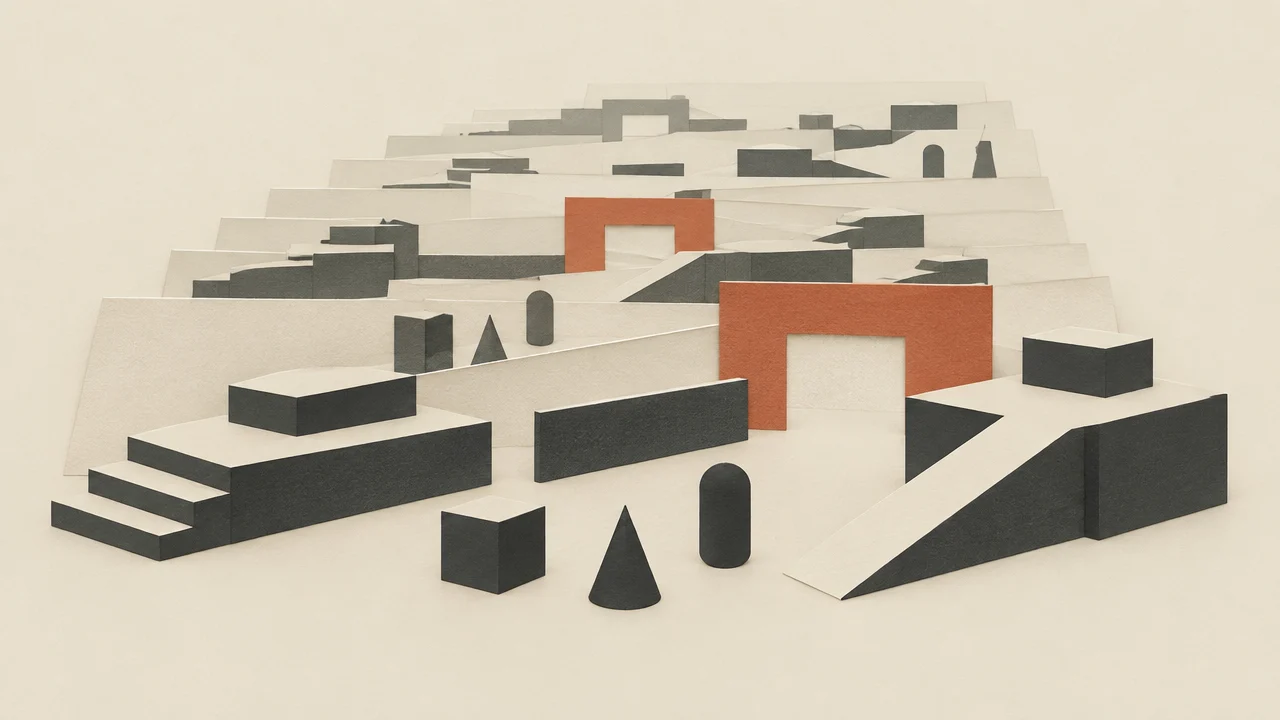
The pain point in early game development is "the boredom of the white-box stage": level designers build layouts with blocks and capsules, and during gameplay validation everyone is imagining "this will be a tavern someday." Text-to-3D can replace that imagining with something visible — use a few prompts to batch-produce placeholder models for environment props such as treasure chests, barrels, street lamps, and stalls, and put them straight into the scene to run.
The acceptance criteria for this scenario are clear: style consistency takes priority over detail precision. Models in the prototype stage do not need high polygon counts; what they need is consistency across all props in the same level in terms of volume relationships, color tendency, and silhouette recognizability. Therefore, prompts should explicitly constrain style words (low-poly, cartoon, realistic) and reuse the same style prefix across the same batch as much as possible.
The specific step it accelerates is early validation of levels and gameplay: a question like "how many cover spots should this room have" used to wait for art scheduling; now three versions can be tried the same day. It should be clear that these assets are not final deliverables and will still be replaced or remade when entering formal production — treating them as disposable scaffolding keeps both team mindset and process healthier.
Scenario 2: Three-Dimensionalization for E-commerce and Product Display
E-commerce has always had demand for 3D display, but supply has long been insufficient: building a rotatable 3D model for every SKU costs far more than taking a few photos. Text-to-3D offers a middle path — starting from the product title and selling-point description, generate a 3D model usable for page preview, letting users rotate it in the detail page and see the overall form.
The boundary conditions here must be stated clearly in advance. Text-to-3D generates a "reasonable imagination based on the description," not an exact reproduction of the real product. Dimensions, port locations, material textures, and logo details may all differ from the physical item. Therefore it suits two kinds of products: categories with simple forms that win on silhouette and volume (home decor, toys, the outer shape of shoes and bags), and displays used to explain structural relationships (which parts make up a product, how it is assembled).
For products that need exact reproduction, the correct approach is to treat the generated model as design reference or page illustration, while physical information still follows real product photos; alternatively, hand the generated result to artists for secondary correction, as a starting point for modeling rather than the endpoint. During acceptance, focus on two things: whether it rotates naturally (no obvious broken faces or floating structures), and whether it conflicts visually with the main product image. Conflict hurts conversion more than imprecision.
Scenario 3: 3D Printing and Customized Small Goods
Personalized customization is one of the commercial forms that best fits text-to-3D: users describe the shape they want in a paragraph, the system generates a model, and it goes directly into printing or small-batch production. Figurines, charms, desktop ornaments, and cultural creative small items all belong to this pipeline.
The process must extend from generation to manufacturing: text → model → slicing software → printing. In between there is a mandatory manual review checkpoint. The reason is practical: the output of text-to-3D is a visually plausible model, but not necessarily a printable model. Common issues include insufficient wall thickness, internal cavities or floating structures, too many positions requiring supports, and uneven bottom surfaces. Model inspection before slicing (even simple manual repair) should be a standard step in the process, not an option.
This checkpoint is also an opportunity for experience design: make "confirm your model" a user-visible step, letting users preview and confirm, which both lowers the scrap rate and makes the customization process feel more participatory. Acceptance criteria should focus on manufacturability — slices smoothly, reasonable supports, and the finished product matches the preview form.
Scenario 4: Visualization Materials for Education and Science Communication
The dilemma of teaching materials is "much needed, little produced": a single lesson may need molecular structures, planet models, and cross-sections of mechanical parts at the same time; modeling each one is unrealistic, and finding ready-made materials often does not match the specific knowledge point. Text-to-3D lets teachers or content teams batch-generate interactive 3D models by knowledge point.
The typical usage is batch production: break the course outline into specific visualization objects, generate them one by one, and form a reusable material library. Compared with static illustrations, 3D models can be rotated, disassembled, and observed from multiple angles, which is clearly more effective for explaining spatial relationships and structural principles.
Acceptance criteria should focus on scientific accuracy rather than aesthetics. Generated models are often plausible in form, but may deviate in proportions, structures, or part relationships, and need subject-matter staff to review them. Therefore, it is recommended to use a three-stage process of "generate — review — archive," with the review step supervised by people who understand the content; after passing, tag it with knowledge points and add it to the material library, avoiding erroneous models being reused repeatedly without anyone noticing.
Scenario 5: Rapid Expression of Architectural and Spatial Concepts
The classic difficulty in the proposal communication stage is: the massing relationships in a designer's mind cannot be described clearly in words, are not sufficiently expressed by sketches, and formal modeling is too heavy. Text-to-3D is suitable for filling this gap — generating several 3D concepts indicating masses and furnishings for intuitive comparison during discussion.
Its correct usage is parallel multiple schemes, not pursuing one precise scheme. For the same site and function description, generate several versions in succession, place different massing combinations, window rhythms, and roof forms side by side for comparison, and the discussion shifts from "what do you think" to "which of these three directions is right." This is early direction screening, not construction drawings, and it does not bear responsibility for dimensional and code accuracy.
The acceptance criterion is whether the massing relationships are readable: whether floor count, setbacks, and primary-secondary relationships can be seen at a glance. The lack of detail is an advantage rather than a defect at this stage, because it keeps the discussion focused on big decisions. Once the direction is determined, move on to the conventional modeling and design development process.
Cost, Quality, and Troubleshooting: Questions That Must Be Answered Before Launch
How to estimate cost. Text-to-3D is billed per call, and the single-call price of hyper3d-rodin-2.5/text-to-3d is $0.5715 per call. The estimation method is straightforward: determine the average number of generations per asset for each scenario (including retries and multiple schemes), and multiply by the total number of assets. For example, 30 props per level in the prototype stage at an average of 2 generations each means 60 calls; putting this formula into the business planning sheet is far more reliable than looking at the bill afterward. Real-time prices are subject to the site's price panel, and the budget model should make the unit price configurable to avoid hard-coding.
How to control quality. Three dimensions should be examined separately. For format, confirm that the returned model format (such as glTF/GLB or OBJ) can be consumed directly by your rendering pipeline or engine, and convert and validate once before archiving if necessary. For topology, generated models often have uneven face counts, non-manifold edges, and incorrect normal orientation; check face count and normals before real-time rendering, and check watertightness before printing. For texturing, pay attention to whether materials are provided with the model, whether texture resolution is sufficient, and whether UVs are stretched. These checks should be solidified as automated steps in the archiving pipeline rather than relying on human spot checks.
What to do when it fails. Common failures fall into three categories: request rejected (prompt triggers content policy or parameters are invalid), generation timeout, and unusable result (broken model, clearly deviating from the description). The first two are solved by retry and timeout strategies, and retries should have a maximum count and backoff; the third requires prompt iteration — write descriptions more specifically and structurally, remove vague adjectives, and add constraints on form and usage. At the same time, prepare a fallback path: when generation is unavailable, fall back to placeholder geometry or an existing asset library to ensure business continuity.
Finally, you should also know which requirements should not use text-to-3D. Parts requiring exact dimensions and engineering tolerances, e-commerce detail pages requiring strict reproduction of real products, character animation assets requiring controllable topology and skeletal rigging, and industrial design requiring editable parametric structures — the determinism requirements of these scenarios exceed the comfort zone of generative methods, and forcing their use only pushes rework cost downstream. The point of selection judgment is always: does this step need speed and diversity, or precision and controllability.
To see specific call parameters and interface shapes, start from the model page of hyper3d-rodin-2.5/text-to-3d, run a minimal example first, and then estimate your own volume using the cost formula above.
Related articles
View all articles →-

Tutorial
Meshy-6 Text-to-3D in Practice: 5 High-Value Application Scenarios and Integration Essentials
-

Tutorial
meshy-6/image-to-3d in practice: 5 high-value use cases and key implementation points
From one image to a usable 3D asset: a cross-cutting view of cost, quality, and engineering integration
-
Tutorial
ltx-2.5-fast/audio-to-video in Practice: 5 Practical Audio-Driven Video Scenarios
A scenario-selection and implementation checklist for developers, from API integration to cost estimation