
Comparison
Vidu Q3 Mix reference-to-video side-by-side comparison: how to choose a reference-to-video model

On this page
Why reference-to-video needs its own selection process
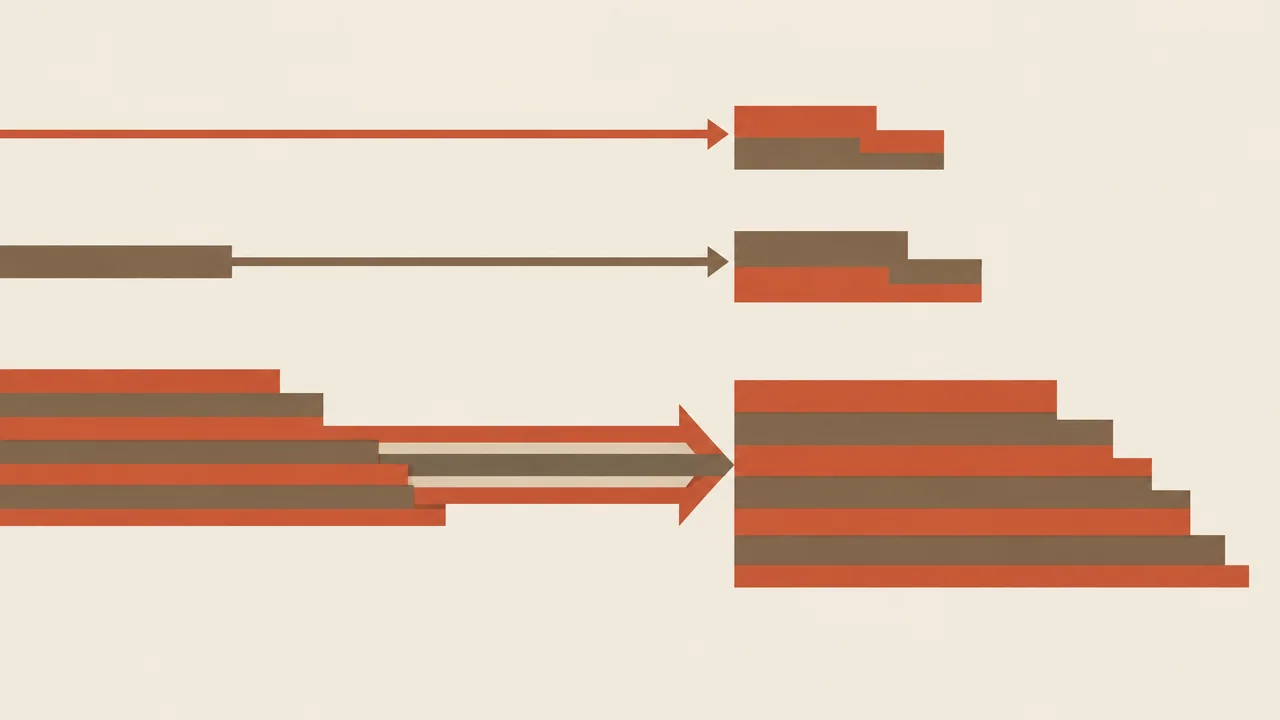
Treating reference-to-video as "text-to-video plus an image" is the most common misjudgment. The input contracts of the three are completely different: text-to-video takes only a text prompt, image-to-video takes "one starting image + text", while reference-to-video takes a set of reference materials—the model must extract reusable visual elements (character appearance, clothing color scheme, stylistic tone) from multiple reference images, then transfer these elements into the newly generated video. When the input format changes, the evaluation criteria must change with it.
Sticking with the old model's evaluation method leads to two pitfalls. First, single-frame image quality is no longer the decisive metric: no matter how clear a reference image is, it doesn't mean the model can reliably "remember" it and keep the appearance consistent across a multi-second video. Second, the denominator of the success rate has changed: failures in reference-to-video are often not image-quality collapse, but reference elements not being correctly inherited (changed face, changed clothes, style drift), which cannot be seen in traditional image-quality scoring.
So reference-to-video requires its own selection process, and the core judgment order should be: first confirm whether the reference input format it requires matches your material reserves, then look at consistency and controllability, and only then image quality and cost. Reverse the order and you'll easily pick a model that "performs well but can't be fed."
Align the input first, then discuss results
In practice, it's advisable to write down each candidate model's input requirements item by item: how many reference images are needed, whether multiple subjects are accepted, who takes priority when reference images and prompts appear together, whether there are constraints on the composition of reference materials. These answers determine whether your material pipeline needs to be rebuilt, and the cost of reworking the material pipeline is usually far higher than the cost of the model calls themselves.
Vidu Q3 Mix's capability boundaries and billing model
Vidu Q3 Mix is provided by Vidu, with video as the output type, and its core capability is reference-to-video. In other words, its positioning is not general-purpose text-to-video, but rather aimed at needs of the "control generation results with reference materials" kind. When selecting, it should be placed in the reference-to-video candidate pool for comparison, not hard-compared on image quality against pure text-to-video models.
Billing is based on output seconds, and this model's meaning for budget estimation is direct: cost is approximately linearly related to video duration. A usable estimate takes this form—
Estimated cost ≈ output seconds × per-second unit price
When calling on HiAPI.ai, the actual output seconds of a single request are constrained by output specifications and duration limits, so when budgeting, don't estimate by "one video" but by "the seconds of one video." Regenerating the same content with a longer duration will raise the cost proportionally.
Two actions that per-second billing brings
First, convert cost to per finished video rather than per call. A finished video often requires running multiple sample takes before a usable one can be picked, so the real budget should include discarded takes. Second, validate with short durations first, then lengthen the versions that pass validation, to avoid producing long videos before confirming whether reference-element inheritance is stable.
For specific unit prices and billing definitions, refer to the site's pricing panel; this article does not elaborate on the numbers.

Which dimensions a side-by-side comparison should examine
The checklist below can be used directly as a review form; fill in each item for every candidate model, and any item you can't fill in is a risk item.
1. Reference input format
How many reference images are needed, whether multi-subject reference is supported, who takes priority when reference images conflict with text prompts, whether there are hard requirements on reference image composition and face clarity. This is the most critical column for reference-to-video, and also the most easily overlooked.
2. Output specifications
Resolution, aspect ratio, frame rate, container format. Specifications determine whether materials can go directly into the editing workflow, and also whether an extra transcoding step is needed.
3. Duration and concurrency
The maximum duration of a single generation, whether continuation or splicing is supported, account-level concurrency limits and queuing policy. The duration limit directly determines the per-item cost ceiling, and concurrency determines whether batch tasks can finish on schedule.
4. Billing unit and failure billing
Per-second versus per-call billing, whether failed requests are billed, how timeouts and interruptions are handled. For per-second billing models, the cost of discarded takes is naturally higher than with per-call billing, and this should be written explicitly in the comparison table.
5. Consistency and controllability
Whether the subject's appearance is stable across multi-second videos, and whether camera movement and scene transitions can be controlled via prompts. This item can only be evaluated through sample takes, not judged from a parameter table.
Fields missing from the parameter table should be confirmed with the platform side rather than assumed from experience—especially duration limits and concurrency limits, where wrong assumptions directly cause scheduling inaccuracy.

Scenario-based selection: when to use it
Mapping needs to model types is much faster than trying each model one by one.
Scenarios where reference-to-video is preferred
- High character consistency requirements: the same person must keep a unified appearance across multiple videos, and reference images are the most direct control method.
- An existing set of visual materials: you already have product images, character design sheets, and style references, and want the generated results to fit the existing visual system.
- Batch production of same-style materials: e-commerce displays, character short dramas, serialized content—reusing a fixed reference set is more stable than rewriting prompts each time.
Scenarios where other formats are more cost-effective
- Pure concept exploration: when the visual direction is not yet determined, text-to-video iterates faster and trial and error is cheaper.
- Turning a single shot into motion: when there is only one image and you just want it to move, image-to-video has simpler input constraints and doesn't need the reference-set workflow.
- Long films extremely sensitive to duration: under per-second billing, the cost of long videos grows linearly; if the finished video requires long durations, evaluate whether segmented generation plus splicing is more controllable.
The criterion can be compressed into one sentence: if you can clearly state "which elements in the reference materials should be retained", use reference-to-video; if you can't, use text-to-video first to explore the direction.
Integration approach and cost trial workflow
It's recommended to proceed in the following order, with a clear stop-loss point at each step.
Step one: confirm the interface and parameter surface
When using this model on HiAPI.ai, under the unified interface context, first confirm the available parameters: how reference materials are passed in, the prompt field, output specifications and duration parameters. Confirm missing fields with the platform side; don't guess.
Step two: run small batches of short-duration sample takes
Use 3–5 sets of real reference materials, generating short-duration sample takes for each set. The goal is to verify whether reference-element inheritance is stable, not to pursue finished-video quality. The key at this step is using your own materials; public example images cannot expose problems in your material pipeline.
Step three: convert to per-finished-video cost
Include the discard rate from the sample-take stage:
Cost per finished video ≈ seconds of output per video × per-second unit price × (1 + discard rate)
The discard rate must be measured from sample takes, not guessed. The discard rate for short-duration sample takes is usually lower than for long videos, so leave upward room when estimating budgets.
Step four: gradually lengthen and scale up
Lengthen the durations of material combinations that pass validation, and only scale up after confirming that consistency does not noticeably degrade in long videos. During the scale-up stage, watch the concurrency limits and queue times; these two directly affect delivery rhythm.
The principle of the whole workflow is: validate results with small samples, validate cost with short durations, and validate scale last.
Notes on migration and replacement
Migrating from an existing video model to reference-to-video is not just swapping an endpoint; three parts need to be redone.
Prompts must be rewritten
Prompts that used to "describe appearance" in the original model should be replaced by reference images in reference-to-video. Continuing to pile appearance descriptions into prompts may instead conflict with the reference materials. The rewriting direction is: prompts handle action, camera, scene, and rhythm, while appearance is left to the reference materials.
Reference materials must be reorganized
The logic for selecting a reference set differs from a single starting image. You need to specify which image carries the subject's appearance, which carries the style, and how to distinguish multiple subjects. It's also advisable to standardize material naming and version management; otherwise, during batch generation it's hard to trace which reference set caused a problem.
Keep an A/B control
During migration, run the old and new models in parallel on the same batch of needs, and compare using the same evaluation criteria: reference-element inheritance rate, discard rate, cost per finished video, end-to-end time. Only by quantifying the replacement benefit is there a basis for a gray-scale switch. It's recommended to switch one low-risk business line first, then expand after it stabilizes.
For the gray-scale strategy, you can switch in batches by content type, starting with the scenarios that have the highest consistency requirements—these scenarios best demonstrate the value of reference-to-video and also most easily expose migration problems.
FAQ and decision checklist
FAQ
Q: Do more reference images make the result better? No. The reference set should cover the elements you truly want to retain; redundant or mutually conflicting reference images introduce noise. Use "complete elements, mutually consistent" as the standard, not quantity.
Q: Is per-second billing always more expensive than per-call? It depends on the duration distribution. In short-video scenarios the per-item cost may be lower, while in long-video scenarios the linear growth is more pronounced. There's only one way to judge: convert using your own duration distribution.
Q: Does a high image-quality score mean the model is better? Not in reference-to-video. Consistency, controllability, and discard rate are the leading metrics; image quality is a threshold item rather than a differentiating item.
Q: What if a field is missing from the parameter table? Confirm with the platform side. For fields like duration limits, concurrency limits, and failure billing policy, wrong assumptions directly break budgets and schedules.
Final decision checklist
- Can my materials meet this model's reference input requirements?
- Is the duration I need within the limit, and is segmentation needed when it's too long?
- After converting per second, is the cost per finished video (including discarded takes) within budget?
- Can the concurrency limit support my batch schedule?
- Has the billing definition for failed requests been confirmed?
- Have I run short-duration sample takes with my own materials and quantified the discard rate?
- Does the migration plan include prompt rewriting and A/B comparison?
Once all seven items have clear answers, proceed to the scale-up stage. When you need an actual comparison, you can directly use Vidu Q3 Mix's reference-to-video capability on HiAPI.ai to run a batch of sample takes with your own materials and use the data to complete the final judgment step.
Related articles
View all articles →-

Comparison
gpt-6.2-sol vs. comparable models: How developers should choose and migrate
Make a side-by-side decision across three dimensions: capability boundaries, pricing structure, and migration cost
-

Comparison
gpt-6.2-astra Side-by-Side Comparison and Selection Guide: How Developers Can Decide Whether It Is Worth Integrating
-

Comparison
Tripo H3.1 Side-by-Side Comparison and Selection Guide: How to Choose Among Three 3D Generation Paths and How to Save
A developer-oriented trade-off between pricing and capability, starting from input form, geometric refinement, and PBR/texture switches