
Tutorial
wan-2.2-animate/move Application Scenarios in Practice: 5 High-Value Video-to-Video Use Cases
From selection judgment to cost estimation, breaking down the implementation path of video-to-video in real business

On this page
Why Choose Video-to-Video Instead of Text-to-Video
When doing video generation, teams often hesitate between two paths: text-to-video and video-to-video. The two differ greatly in cost structure and controllability, and choosing the wrong direction often means repeated trial and error without ever getting a usable result.
The way to decide can be summed up in one sentence: Does the source material already contain a usable video? Is the requirement to "transform an existing shot" or to "generate from scratch"?
If the answer is the former, video-to-video is usually the better path. There are three reasons:
- Visual consistency is guaranteed. Every text-to-video call is a new roll of the dice; characters, composition, and pacing may drift between two generations. Video-to-video uses the existing footage as its baseline, so the output's motion and structure stay closer to the source material, making it suitable for scenarios that need to maintain brand or character consistency.
- Requirements are easier to describe. "Change this shot into another style" is easier to turn into an executable instruction than "describe a shot that never existed," and it is also easier to accept.
- Trial-and-error cost is visible. With video-to-video, the input duration essentially determines the processing scope, so the budget can be estimated before the call rather than relying on repeated generation and luck.
Conversely, if all you have is copy, an image, or a concept, with no usable motion footage, forcing video-to-video will only complicate the problem—in that case you should go back to the text-to-video route.
This article uses Alibaba's wan-2.2-animate/move as an example to break down how video-to-video is implemented in real business. Model details can be found on the wan-2.2-animate/move model page.

Capability Boundaries and Billing Model of wan-2.2-animate/move
Let's state the facts clearly first. wan-2.2-animate/move is provided by Alibaba, its output type is video, and its capability positioning is video-to-video—that is, it takes video input and produces video output.
Its billing method is charged by the seconds of output video. This means cost grows linearly with duration: double the video, double the cost, with no room for assumptions about tiered discounts. When planning a budget, you can first estimate the duration of a single video, multiply by the unit price to get the per-video cost, and then multiply the daily average number of videos by the number of days to get the monthly scale. For the specific unit price, refer to the site's pricing panel; figures are not expanded here.
A few boundaries that need to be made clear:
- This article only discusses the single video-to-video path of
wan-2.2-animate/move, and does not cover text-to-video, image-to-video, or combined solutions with other modalities. - Billing by the second means duration is the budget. Before launch, you should first determine the maximum duration per video and the resolution tier, then work backward to an acceptable daily call volume, rather than running it first and checking the bill later.
- The capability scope centers on "transforming the input video." Requirements beyond this scope (such as building a storyboard from scratch, generating voiceover, or editing and stitching) need to be solved in other stages of the pipeline and should not be expected from a single model call.
Keep these two points in mind, and the subsequent scenario choices have a baseline: any requirement that can provide a qualified source video and whose goal is to transform the footage falls within its range.

Scenario One: Re-interpreting Existing Video Assets
Many teams hold a large amount of historical material: early product demos, old promotional videos, on-site recordings of past events. The visual quality of this material is acceptable, but the style is outdated and the pacing is long-winded, so direct reuse is ineffective, while reshooting is expensive.
The value of video-to-video here is to bring existing assets back into circulation. A typical approach is to pick segments with complete structure and clear subjects, feed them to the model for transformation of style and expression, and produce a new version that fits current aesthetics. To judge whether an old asset is worth transforming, look at three conditions:
- The subject appears stably in frame, without frequent occlusion or being cut out of the frame;
- The camera movement is smooth, without violent shaking or rapid transitions;
- The original resolution is sufficient to support the target output, avoiding distortion after upscaling.
Before transforming, it is advisable to do a small-batch validation first: draw a few representative segments from the asset library and run them through, confirm the output quality meets expectations, and then queue the entire batch for processing. Since billing is by output seconds, it is a more prudent order to first calculate the scale of "total duration of this batch × unit price" and then decide whether to process all of it or only pick high-value segments.
Scenario Two: Multi-Version Batch Production of Marketing Assets
The real pain point for marketing teams is this: a single core creative needs multiple versions for different channels, different audiences, and different placements. The traditional approach is manual re-editing, and deriving five or six versions from one source video consumes a large amount of labor hours.
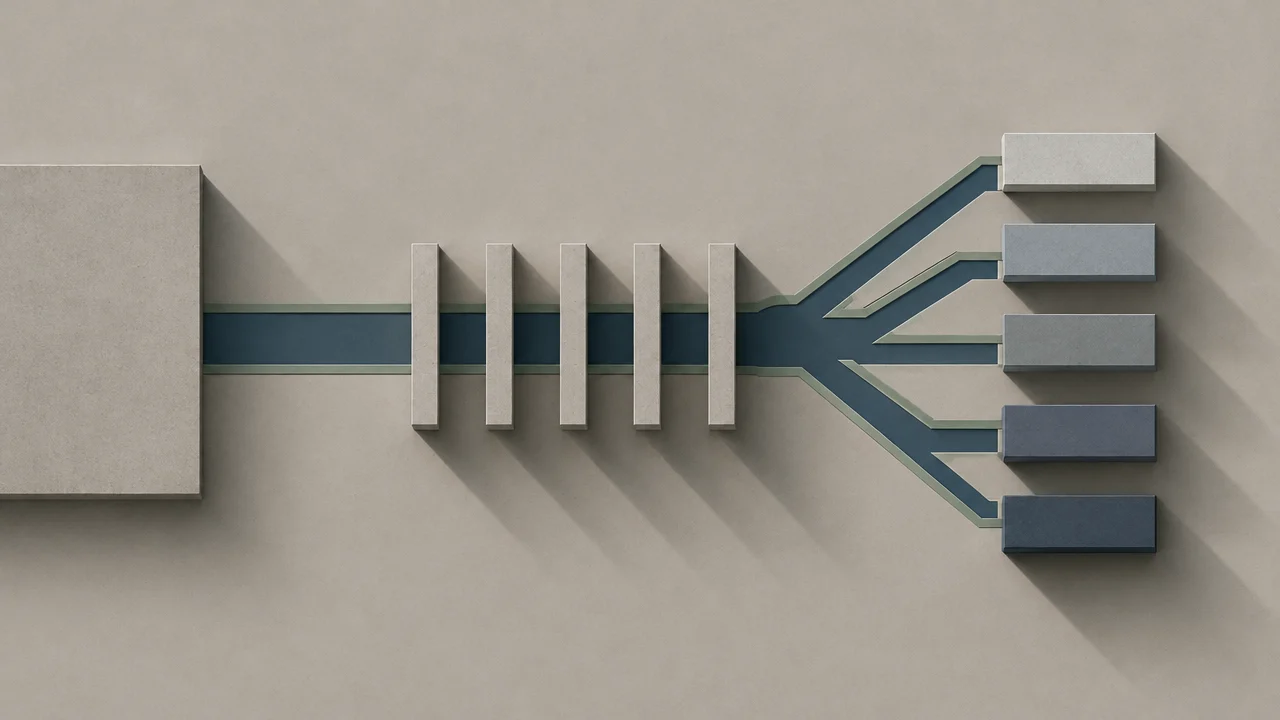
Video-to-video is well suited to this kind of "one source, many versions" derivative work. The pipeline is organized roughly like this: one source video enters the queue, is distributed into multiple tasks by preset transformation dimensions, each task produces an independent version, and the results are collected uniformly and then enter the delivery system. Three engineering points require attention:
- Queued rather than synchronous calls. Batch tasks take a long time and should be placed in an asynchronous queue, with task IDs used to track status, avoiding request timeouts that force the whole batch to rerun.
- Deduplication and naming conventions. Multi-version output is easily confused, so output files should be named "source asset ID + transformation dimension + version number" for easy traceability and A/B comparison.
- Cost gate. The number of versions multiplied by the seconds per video is the real consumption of this batch. Set a maximum version count per batch before launch to prevent a single misoperation from blowing through the budget.
Once this pipeline runs smoothly, the value is not in how powerful a single call is, but in turning "transforming existing footage" into repeatable, batchable, and measurable production capacity.
Scenario Three: Stylized Processing of UGC and Social Short Videos
Products for content platforms and creator tools often need to process massive amounts of user-uploaded videos. This scenario is especially sensitive to input specifications: user uploads vary in duration, image quality, and aspect ratio, and sending them directly to the model easily yields unstable results.
An effective practice is to add a layer of input specification convergence before the model:
- Truncate overly long videos, processing only the segments within the duration limit, with the rest not entering the billing scope;
- Block assets with excessively low resolution outright to avoid blurry output after upscaling;
- Unify aspect ratio and frame rate to reduce processing failures caused by specification mismatches.
The advantage of short videos is their short individual duration, making the per-video cost under per-second billing relatively controllable, suitable for a creator-facing per-use feature. But precisely because the volume is large, the focus of cost control shifts from "per-video optimization" to "intercepting invalid calls"—the earlier a request destined to fail is blocked, the more money is saved.
Scenario Four: Dynamization of E-commerce and Product Display Videos
Product videos are the most standardized type of material: fixed camera position, clean background, clear subject, and duration usually within tens of seconds. These characteristics make them ideal input for video-to-video.
In this scenario, the goal of transformation is usually not to change the product itself, but to enhance the expressiveness and visual consistency of the footage—making assets shot in different batches more uniform in style, or making display shots with a strong static feel more dynamically tense. For implementation, it is recommended to:
- Establish an asset admission checklist, accepting only product videos that meet camera and background standards, ensuring output stability from the source;
- Process by category groups, using the same set of transformation parameters for assets in the same category, reducing the cost of tuning each one;
- Send output results into a review stage; product footage has high accuracy requirements, so manual spot checks are still needed after the automated workflow.
Since product videos are generally short, the per-video cost is highly predictable, making them suitable for batch planning by SKU scale.
Scenario Five: Localization and Multi-Market Content Adaptation
When the same set of content targets multiple markets, the reuse rate of video assets is often low—language, subtitles, visual tone, and cultural context all need adjustment. Video-to-video can take on the footage transformation part, turning "adapting one set of assets to multiple markets" from heavy re-editing into batch processing.
Two strategic points are worth noting:
- Batch processing grouped by market. Different markets have different transformation needs, so batches should be organized by market rather than mixing tasks from all markets into one queue, otherwise results are hard to aggregate and accept.
- Define the reuse boundary first. Which assets can be reused across markets and which must be reshot should be clarified at the process design stage. What video-to-video can do is re-interpretation at the visual level; deep adaptation involving language and cultural expression still requires coordination with other stages.
The cost of batch processing is likewise a linear accumulation of "number of assets × seconds per video," so prioritizing the core assets of high-exposure markets is a more cost-effective way to start.
Integration Implementation and Troubleshooting Checklist
To put all scenarios into engineering practice, the integration of wan-2.2-animate/move can be summarized into three groups of checks.
Input-Side Validation
- Does the source video meet the maximum duration and minimum resolution;
- Is the subject stably visible in frame, and is there violent shaking or rapid transitions;
- Have the aspect ratio and frame rate been unified and converged.
Input-side problems account for the majority of failure causes; establishing input validation is more effective than repeatedly tuning parameters.
Asynchronous and Queue Processing
- All batch tasks go through an asynchronous queue, with task IDs used to track status;
- Set timeouts and retry limits to avoid a single failure dragging down the whole batch;
- Name output files according to conventions, preserving the mapping between source assets and transformation parameters for easy traceability.
Cost Guardrails
- Estimate before calling: seconds per video × unit price × number of videos to get the batch cost;
- Set call limits per batch and per day to prevent accidental triggering;
- Pre-block requests destined to fail to reduce invalid billing.
The recommended pre-launch check order is: first verify that a single link runs through, then run a small batch queue, and only finally open up the scale. Record the actual time consumption and output quality at each step as input for the next stage of planning.
The value of video-to-video is not in how impressive a single call is, but in whether it can be embedded into existing content pipelines to produce stable, measurable, and repeatable output. By solidifying input validation, asynchronous processing, and cost guardrails, wan-2.2-animate/move can become a routine capability in a team's content production rather than a one-off experiment.
Related articles
View all articles →-

Tutorial
Meshy-6 Text-to-3D in Practice: 5 High-Value Application Scenarios and Integration Essentials
-

Tutorial
meshy-6/image-to-3d in practice: 5 high-value use cases and key implementation points
From one image to a usable 3D asset: a cross-cutting view of cost, quality, and engineering integration
-
Tutorial
ltx-2.5-fast/audio-to-video in Practice: 5 Practical Audio-Driven Video Scenarios
A scenario-selection and implementation checklist for developers, from API integration to cost estimation